

Misturador para moinhos de ração
O misturador de ração é o equipamento chave na linha de produção de ração animal, especialmente concebido para misturar de forma eficiente e uniforme várias matérias-primas de ração.

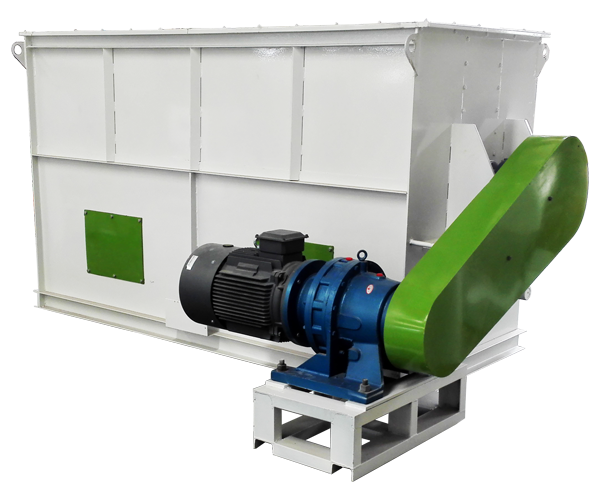
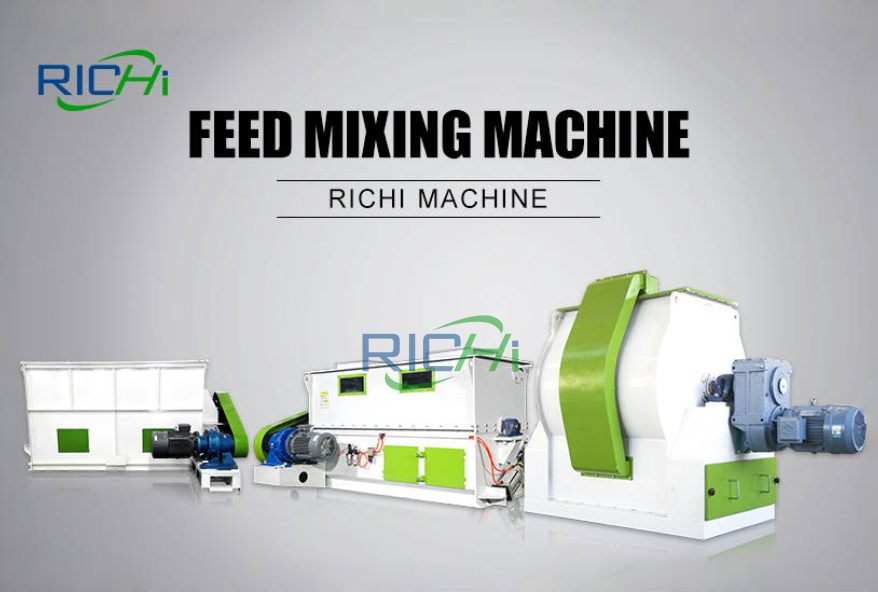
O que é um misturador de ração?
O misturador para fábricas de rações é um equipamento de mistura especializado concebido para fábrica de pellets para alimentação animal, A máquina de mistura de alimentos para animais, que desempenha um papel importante na linha de produção de alimentos para animais. Através da sua estrutura mecânica avançada e de acordo com os requisitos científicos de formulação, pode misturar completa e uniformemente matérias-primas para alimentação animal, como milho, farelo de soja e farelo de trigo com pré-misturas de minerais e vitaminas, produzindo finalmente alimentos acabados. Através do processo de mistura do misturador de ração, os componentes nutricionais da ração final são garantidos para serem equilibrados e a qualidade é estável.
A qualidade da máquina misturadora de rações afecta diretamente o valor nutricional e o sabor da ração. A escolha de um misturador fiável, durável e seguro não só permite uma mistura flexível da ração, como também melhora significativamente a eficiência da produção e reduz os custos de produção.
Quer se trate de ração para aves, ruminantes ou aquáticos, o misturador de fábrica de ração RICHI pode misturar totalmente e atender aos requisitos de mistura de diferentes combinações de matérias-primas. Se você precisa comprar um equipamento de mistura ou precisa equipar outro equipamento correspondente, RICHI pode fornecer-lhe serviços personalizados.
MÁQUINAS RICHI
Como funciona a máquina misturadora de ração?
O misturador da fábrica de rações é acionado por energia mecânica para operar o dispositivo de mistura interno. Durante o processo de mistura, o misturador roda para mover as matérias-primas de várias formas, conseguindo uma dispersão uniforme e evitando a aglomeração e estratificação. Após a conclusão da mistura, os materiais são descarregados da saída. Os principais métodos de descarga são a descarga manual e a descarga pneumática.
Todo o processo de mistura é controlado com um tempo razoável, normalmente concluído em alguns minutos, garantindo que a ração é misturada uniformemente sem danificar a estrutura da matéria-prima. O efeito de mistura eficiente pode garantir que a alimentação final satisfaz as necessidades nutricionais dos animais.
classificação de misturador para moinhos de ração
- Maquinaria Richi -
Diferentes tipos de misturadores de alimentos para animais, com base na sua estrutura e métodos de mistura, podem satisfazer os requisitos de produção de várias escalas e fórmulas de alimentos para animais. As especificações e os parâmetros destes não só determinam a eficiência da produção e a qualidade da mistura, como também afectam diretamente o consumo de energia, o espaço no chão e o custo de manutenção do equipamento. Abaixo, listamos todos os tipos de máquinas de Maquinaria RICHI e os seus principais parâmetros técnicos para o ajudar a determinar rapidamente qual o modelo mais adequado para a sua linha de produção.
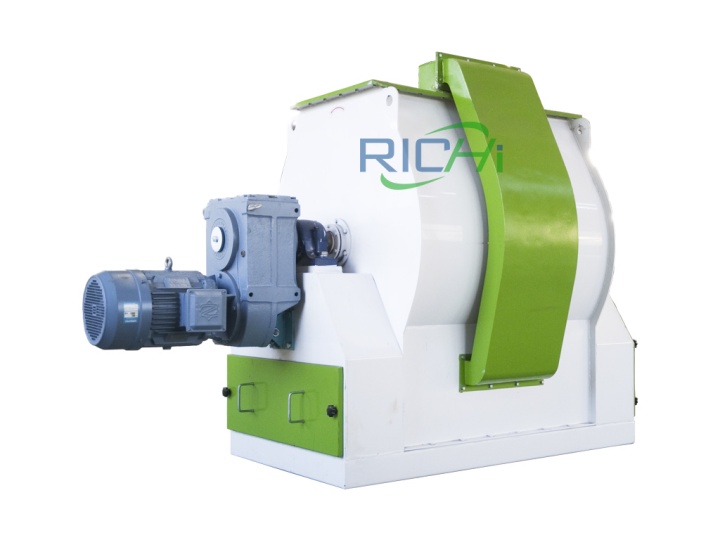




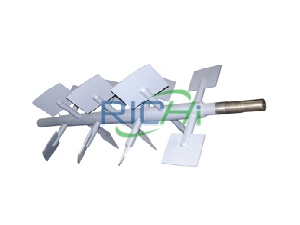

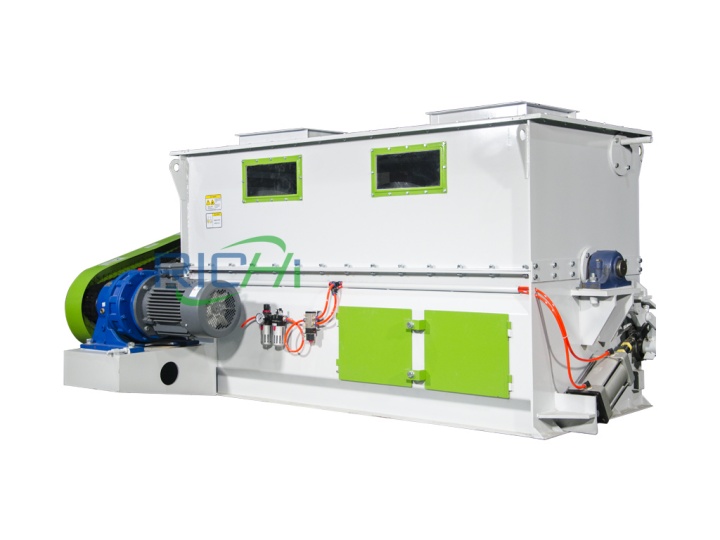
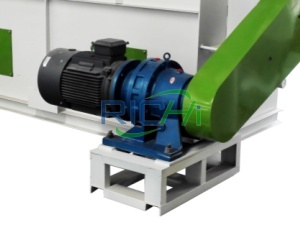


Se precisar de ajuda para escolher a máquina misturadora de ração certa, contacte-nos e diga-nos as suas necessidades, recomendaremos o melhor tipo para si.
MÁQUINAS RICHI
Vantagens do produto misturador de ração RICHI
O Maquinaria RICHI O misturador de ração, aproveitando anos de experiência na indústria e técnicas de fabrico avançadas, pode completar a mistura de alta precisão num curto período de tempo e é compatível com várias formas de matérias-primas e requisitos de fórmulas. Quer se trate de um misturador de pá de eixo único, de um misturador de pá de eixo duplo, de um misturador de fita ou de outros tipos de equipamento de mistura, podemos fornecer aos clientes as soluções mais adequadas e alcançar a automatização da produção e a conservação de energia.

Excelente uniformidade da mistura
O misturador de ração RICHI adopta um design avançado de estrutura de lâmina ou parafuso para garantir que os pellets de matéria-prima são distribuídos uniformemente por todo o lote. Com um design de rotor optimizado e ângulos de mistura calculados com precisão, um ciclo de mistura completo demora apenas 1 a 5 minutos.
O coeficiente de uniformidade da mistura pode atingir ≤ 5%, evitando diferenças na alimentação e maximizando o desempenho de crescimento dos animais. Esta capacidade de mistura de alta precisão é particularmente importante para fórmulas de alto valor e requisitos nutricionais especiais.

Estrutura durável e fácil de manter
O misturador de ração RICHI é fabricado em aço inoxidável ou aço carbono de alta qualidade e pode ser opcionalmente equipado com revestimentos resistentes ao desgaste ou anti-corrosão. A estrutura totalmente soldada garante a resistência do equipamento, com superfícies internas lisas que não são propensas a colagem.
Esta conceção reduz significativamente os resíduos, diminui a frequência de limpeza e o tempo de paragem para manutenção e assegura o funcionamento estável e eficiente da sua linha de produção durante muitos anos.
Ampla aplicabilidade e suporte para personalização
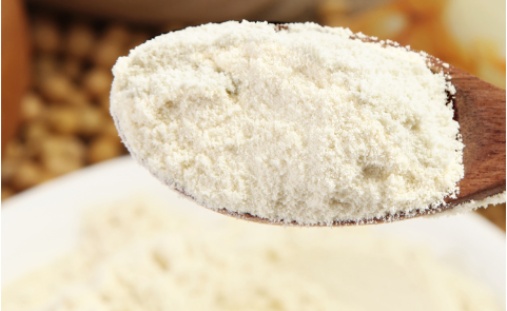
A nossa máquina misturadora de ração pode lidar com várias matérias-primas e aditivos com facilidade, e é adequada para várias formulações de ração, incluindo ração para aves, ração para ruminantes e ração aquática.
O RICHI pode personalizar a capacidade de produção, o método de descarga, o sistema de pulverização de líquido e o controlo automático de acordo com os requisitos do cliente, permitindo que o misturador corresponda perfeitamente às caraterísticas da matéria-prima, à disposição da fábrica e aos objectivos de produção.
casos globais de misturador de moinho de ração animal
- RICHI Máquinas -
Os trituradores e misturadores são necessários na fase de pré-processamento da produção de alimentos para animais. Trituram as matérias-primas até ao tamanho de partícula desejado e, em seguida, misturam-nas para formar um material que pode ser expandido ou peletizado.

Misturador de bateria
- País do projeto: Ruanda
- Projeto de aplicação: 1-2T/H Fábrica de pellets para alimentação de aves de capoeira no Ruanda
- Matéria-prima: Milho, farinha de soja, farelo de trigo, aditivos
- Antecedentes do projeto: Os avicultores do Ruanda há muito que enfrentam problemas de qualidade instável da ração e de custos de aquisição elevados. Para resolver estes problemas, este cliente planeia adquirir o nosso misturador de rações na linha de peletização, a fim de garantir que cada grão de ração é nutricionalmente equilibrado. Isto não só melhora a qualidade da ração e promove o crescimento das aves de capoeira, como também reduz os custos de produção.
- Outros equipamentos para o projeto: Moinho de martelos, máquina granuladora de ração, refrigerador, embalagem automática
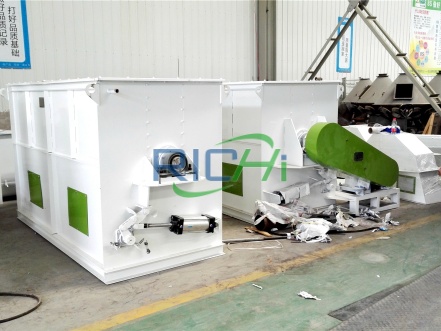
Misturador de fitas
- País do projeto: Mauritânia
- Projeto de aplicação: 10T/H Fábrica de transformação de alimentos para animais
- Matéria-prima: Milho, farinha de peixe, aditivos
- Contexto do projeto: Este cliente pretende produzir alimentos para animais de alta qualidade de forma mais eficiente. Por isso, adquiriu o misturador de rações RICHI. Com esta máquina, todas as matérias-primas podem ser misturadas rápida e uniformemente, assegurando que cada lote de ração é nutricionalmente equilibrado. Isto não só melhora a qualidade da ração, como também optimiza a eficiência da produção.
- Outros equipamentos para o projeto: Moinho de martelos para rações, moinho de pellets para rações comerciais, refrigerador, embalagem automática

Misturador de fitas
- País do projeto: Bósnia e Herzegovina
- Projeto de aplicação: Linha de produção de rações 0,5T/H
- Matéria-prima: Trigo, milho, farinha de ossos, aditivos
- Contexto do projeto: Este cliente, um pequeno criador de gado, tem como objetivo produzir alimentos de alta qualidade para suínos, controlando simultaneamente os custos. Acrescentaram uma secção de mistura à linha de produção de rações. Com a ajuda do equipamento de mistura, todas as matérias-primas são misturadas uniformemente num curto espaço de tempo. Isto não só garante que cada granulado de ração é nutricionalmente equilibrado e promove o crescimento dos animais, como também reduz os desperdícios de produção.
- Outro equipamento para o projeto: Moinho de martelos para alimentação animal, máquina de pellets para alimentação de suínos, refrigerador, equipamento de crivagem

Misturador de pá de eixo único
- País do projeto: Afeganistão
- Projeto de aplicação: 10T/H Fábrica de ração animal no Afeganistão
- Matéria-prima: Sêmea de trigo, farinha de soja, farinha de ossos, aditivos
- Antecedentes do projeto: Este cliente espera melhorar a qualidade da ração durante o processo de produção e, ao mesmo tempo, aumentar a eficiência da produção. Com a ajuda do misturador de ração RICHI, todas as matérias-primas podem ser misturadas de forma rápida e uniforme, mantendo uma nutrição consistente. Isto não só melhora a qualidade da ração, mas também reduz as variações de produção, tornando todo o processo de produção mais suave e mais eficiente.
- Outros equipamentos para o projeto: Moinho de martelos para rações SFSP, prensa de pellets para alimentação animal, refrigerador, equipamento de crivagem, embalagem automática
Como escolher o misturador certo para o moinho de ração
A escolha do misturador certo para a fábrica de rações é crucial para garantir a qualidade da ração, a eficiência da produção e o controlo dos custos operacionais a longo prazo. Ao selecionar um misturador, considere os seguintes factores.
Capacidade de produção
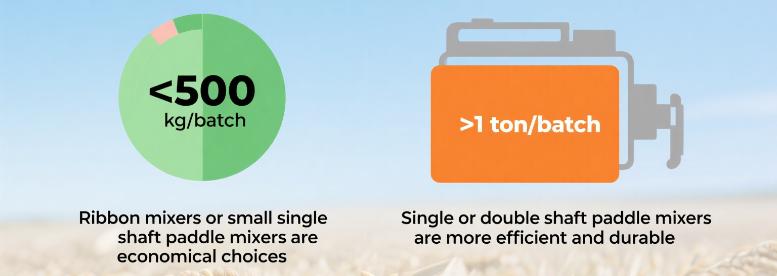
Produção em pequena escala (≤500 kg/lote): Os misturadores de fita ou os pequenos misturadores de pá de veio único são escolhas económicas. Produção de média a grande escala (>1 tonelada/lote): Os misturadores de pás de veio simples ou duplo são mais eficientes e duradouros.

Custos de manutenção e de funcionamento
Custo mínimo: O misturador de pás de eixo único utiliza uma ligação direta com o redutor, o que resulta num custo de manutenção mais baixo.
Custo médio: O misturador helicoidal requer apenas a substituição da correia. A probabilidade de danificar a polia é baixa.
Custo máximo: O misturador de lâminas de eixo duplo utiliza acionamento por corrente. Tem de ser regularmente oleado, inspeccionado e as correntes substituídas.

Tempo e uniformidade da mistura
Misturadores de pás: 1-3 min, CV ≤ 5%, melhores para linhas de alimentação topo de gama.
Misturadores de fita: 3-5 min, uniformidade ligeiramente inferior, adequados para diferenças especiais de material.

Método de descarga
Descarga manual: Adequado para pequenas capacidades, investimento reduzido.
Descarga pneumática: Descarga mais rápida, porta semi-aberta para 500 kg, porta totalmente aberta para ≥1 tonelada.
Selecionar o misturador certo para a fábrica de rações não é apenas uma questão de capacidade - é uma questão de encontrar uma solução que se adapte aos seus objectivos de produção, matérias-primas e orçamento a longo prazo.
Contacte-nos hoje para obter uma recomendação personalizada para a sua operação.
MÁQUINAS RICHI
Aplicação de uma única máquina na linha de produção
Na linha de produção de alimentos para animais, o misturador da fábrica de alimentos para animais está frequentemente localizado no meio de todo o processo, que liga a parte da frente da preparação da matéria-prima e a parte de trás da granulação e embalagem.
Antes da mistura, efectuamos um pré-tratamento das matérias-primas. As matérias-primas serão limpas e trituradas para garantir que todas as matérias-primas tenham o mesmo tamanho de pellet e não tenham impurezas.
O material processado é então introduzido num misturador de alimentos para animais para uma mistura completa, que normalmente demora entre 1 e 5 minutos, dependendo da complexidade da fórmula do alimento para animais.
Após a mistura, a mistura será submetida a esterilização e maturação num granulador ou extrusor, sendo depois extrudida através de uma matriz em anel para formar pellets.
Os pellets recém-prensados têm de ser arrefecidos. Após o arrefecimento, os granulados acabados são embalados e peneirados, e o processo de produção é concluído.
Sendo um equipamento importante que liga a trituração e a granulação das matérias-primas, o desempenho do misturador da fábrica de rações afecta diretamente a eficiência e a qualidade do produto de toda a linha de produção. A seleção de um misturador adequado à sua própria capacidade de produção e ao tipo de ração pode efetivamente garantir uma produção sem problemas, melhorar a uniformidade da ração e promover o crescimento saudável dos animais.

Perguntas mais frequentes
Sabemos que escolher a misturadora para fábricas de rações correta e mantê-la a funcionar sem problemas pode levantar muitas questões. Para o ajudar a tomar decisões seguras e a tirar o máximo partido do seu investimento, compilámos respostas a algumas das perguntas mais comuns dos nossos clientes.
Qual é a diferença entre descarga manual e pneumática?
A descarga manual é simples, de baixo custo e funciona bem para misturadores de 500 kg ou menos, especialmente quando os orçamentos são apertados ou quando a automatização não é uma prioridade.
A descarga pneumática, por outro lado, é a escolha ideal para misturadores de 1 tonelada ou mais - abre e fecha mais rapidamente, reduz os resíduos e ajuda a manter as linhas de produção em movimento. Para uma produção de grande volume, a descarga pneumática compensa-se frequentemente em tempo poupado.
Com que frequência devo efetuar a manutenção do misturador?
Os bons hábitos de manutenção não só prolongam a vida útil do equipamento como também garantem uma qualidade estável dos alimentos para animais.
Para os misturadores acionados por corrente, o estado da corrente deve ser verificado mensalmente e lubrificado com óleo. Geralmente, a corrente e a roda dentada têm de ser substituídas a cada 2-3 anos. Para os misturadores acionados por correia, a correia tem de ser substituída irregularmente e é pouco provável que a polia da correia se desgaste. No tipo de ligação direta, a manutenção é quase insignificante, mas o custo de aquisição é mais elevado.
O misturador pode manusear aditivos líquidos?
Sim, a maioria dos misturadores pode ser equipada com um sistema de pulverização de líquidos, permitindo a adição de óleos, melaço ou outros nutrientes líquidos durante o processo de mistura. Em aplicações práticas, o equipamento da RICHI pode garantir uma distribuição uniforme do líquido e evitar que as matérias-primas se aglomerem, o que é particularmente benéfico para melhorar a palatabilidade e o valor nutricional da ração.
Como é que escolho o misturador para fábricas de rações adequado para a minha linha de produção?
Ao escolher o misturador adequado, não se deve focar apenas no preço, mas também considerar a capacidade de produção, a eficiência e a fiabilidade do equipamento.
Em primeiro lugar, analise o seu volume de produção diário. Se for uma grande fábrica de rações que necessita de uma produção contínua e de um elevado rendimento, um misturador de pás de eixo único ou de eixo duplo de elevada capacidade pode completar a mistura em 1-3 minutos, com uma uniformidade de CV ≤ 5%. Se se tratar de uma produção em pequena escala ou se as matérias-primas da fórmula tiverem densidades e tamanhos de partículas diferentes, um misturador helicoidal seria uma escolha mais económica. Embora o tempo de mistura seja ligeiramente mais longo (3-5 minutos), tem uma maior adaptabilidade às matérias-primas.
Ao mesmo tempo, não se esqueça de considerar os custos de operação e manutenção subsequentes. Alguns misturadores requerem inspecções frequentes e substituição de correntes ou correias, enquanto outros quase não requerem manutenção, mas têm um preço de compra mais elevado.
MÁQUINAS RICHI
POR QUE NOS ESCOLHER?
Selecionar os fornecedores de equipamento certos é fundamental para conseguir uma produção estável e uma rentabilidade a longo prazo. Como fabricante líder do sector, MÁQUINAS RICHI combina décadas de experiência, tecnologia avançada e uma rede global de serviços para fornecer equipamentos que satisfazem as necessidades dos clientes e personalizam as linhas de produção. As três vantagens principais que se seguem demonstram porque é que milhares de clientes globais escolhem a nossa parceria.

Padrões de qualidade rigorosos e experiência rica
Com mais de 20 anos de experiência no fabrico de pellets, temos servido milhares de clientes em todo o mundo em mais de 120 países e regiões.
A nossa reputação resulta de normas de qualidade internacionais rigorosas, com todos os produtos certificados pela ISO, CE, SGS e outras certificações internacionais, garantindo um desempenho estável e uma qualidade fiável.

Esquema de produção de pellets de ração personalizado
Personalizamos solução para instalações de peletização para cada cliente, com tecnologia avançada e serviços de conceção profissionais, abrangendo todo o processo de apoio desde o fabrico, entrega até à instalação e formação.
Cada solução tem como objetivo ajudar os clientes a alcançar uma produção eficiente, inteligente e sustentável.

Um serviço pós-venda abrangente garante um funcionamento a longo prazo
O nosso compromisso vai para além do fornecimento de equipamento e inclui serviços pós-venda de resposta rápida que abrangem tudo, desde a consulta inicial até à manutenção a longo prazo.
Dedicamo-nos a construir parcerias duradouras, baseadas na responsabilidade e na confiança. Contacte-nos agora para obter soluções personalizadas e orçamentos que irão elevar a sua produção a novos patamares.

