
Biomass Pellet Making Plant
A biomass pellet making plant can efficiently convert agricultural and forestry waste, such as wood chips, straw, and rice husks, into high-density fuel pellets. As an efficient and environmentally friendly renewable energy solution, it helps reduce carbon emissions and fully utilize natural resources.

What is the Biomass Pellet Making Plant?
A biomass pellet making plant is a complete production system designed to convert various agricultural and forestry waste materials—such as sawdust, wood chips, rice husks, straw, corn stalks, and palm shells—into clean, high-density fuel pellets. These pellets offer stable combustion and high energy efficiency, making them an ideal alternative to traditional energy sources such as coal, oil, and natural gas. They are widely used in heating, power generation, and various industrial applications.
During the production process, the raw materials undergo a series of steps: crushing, drying, pelletizing, cooling, and packaging. The core equipment of this system is the biomass pellet mill, which uses high-temperature and high-pressure extrusion to press the processed raw materials into cylindrical pellets with a diameter of typically 2–12 mm. The system also includes key equipment such as a crusher, dryer, cooler, conveyor, and automatic packaging machine, ensuring stable, efficient, and high-quality production. Production capacity can be flexibly customized to meet specific needs, ranging from small production lines with a capacity of 0.3 tons per hour to large-scale industrial production lines with a capacity of over 40 tons per hour, all of which can be automated.
After processing, the previously loose, bulky biomass waste is transformed into dense fuel pellets that are easy to store and transport. This conversion process not only reduces storage and transportation costs for raw materials but also significantly increases the economic value of agricultural and forestry byproducts.
Through this systematic production method, the biomass pellet making plant not only provides a reliable source of renewable fuel but also embodies the concept of a circular economy model—transforming waste into resources and energy, contributing to the achievement of global low-carbon development and environmental protection goals.

How to make biomass pellets?
To give you a more intuitive understanding of how a biomass pellet making plant operates, the following video showcases the complete pellet production process. From raw material pretreatment, crushing, drying, pelletizing, cooling, to final packaging, every step is carefully designed to ensure high production efficiency and consistent pellet quality. By watching this video, you’ll clearly see how agricultural and forestry waste is transformed into high-density renewable energy pellets through RICHI’s advanced equipment and sophisticated engineering design.
Working process of Biomass Pellet Making Plant
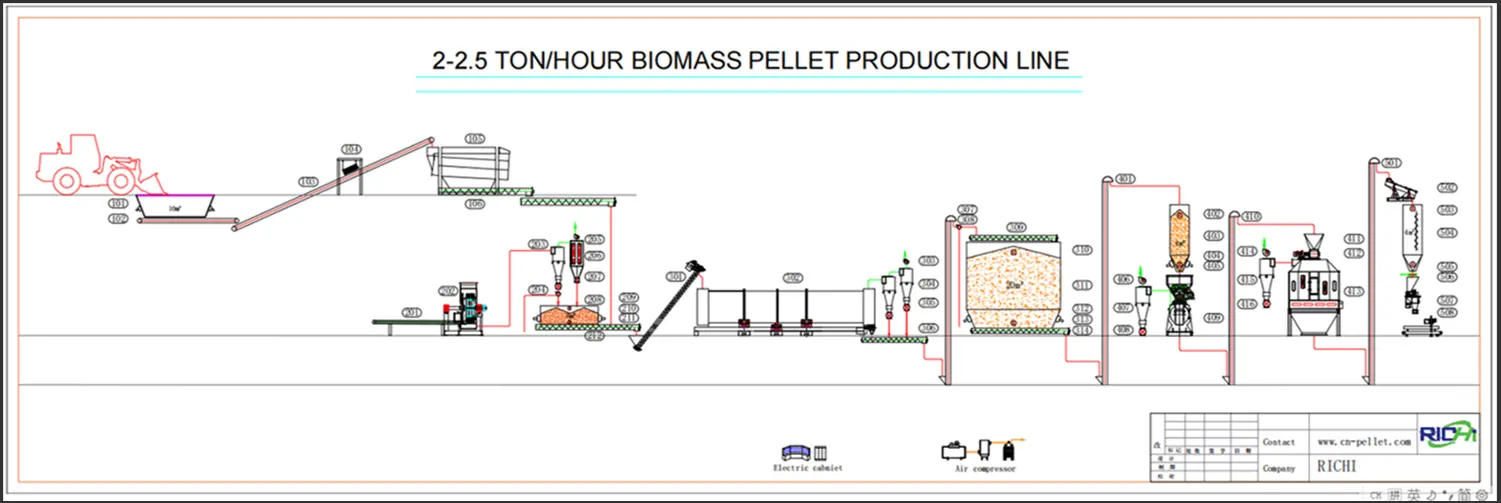
The production process of a biomass pellet making plant typically follows these steps: pretreatment → crushing → drying → pelletizing → cooling and screening → packaging. Each step is essential to ensure high-quality pellets and smooth operation.
1. Raw Material Collection & Pre-treatment
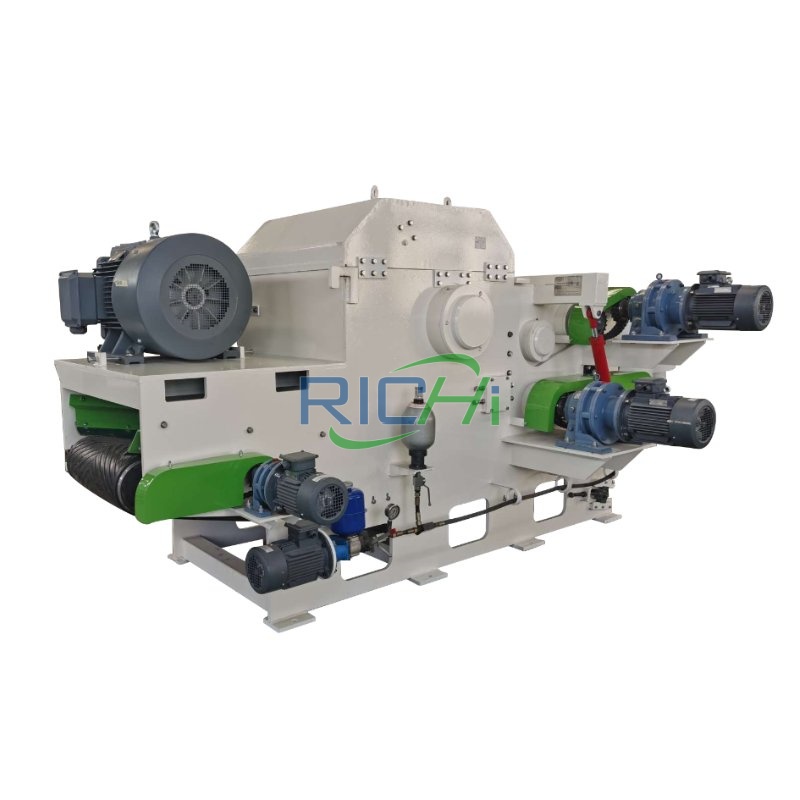
Before entering the mill, raw materials such as wood chips, branches, agricultural and forestry waste, or animal feed ingredients (corn, soybeans, bran, straw) are cleaned. Larger logs are sliced using a wood chipper. By removing stones, metal impurities, and weeds, the raw materials are kept clean, reducing wear on equipment and ensuring stable operation in subsequent processes, thereby improving the quality of the finished pellets.
2. Crushing Section
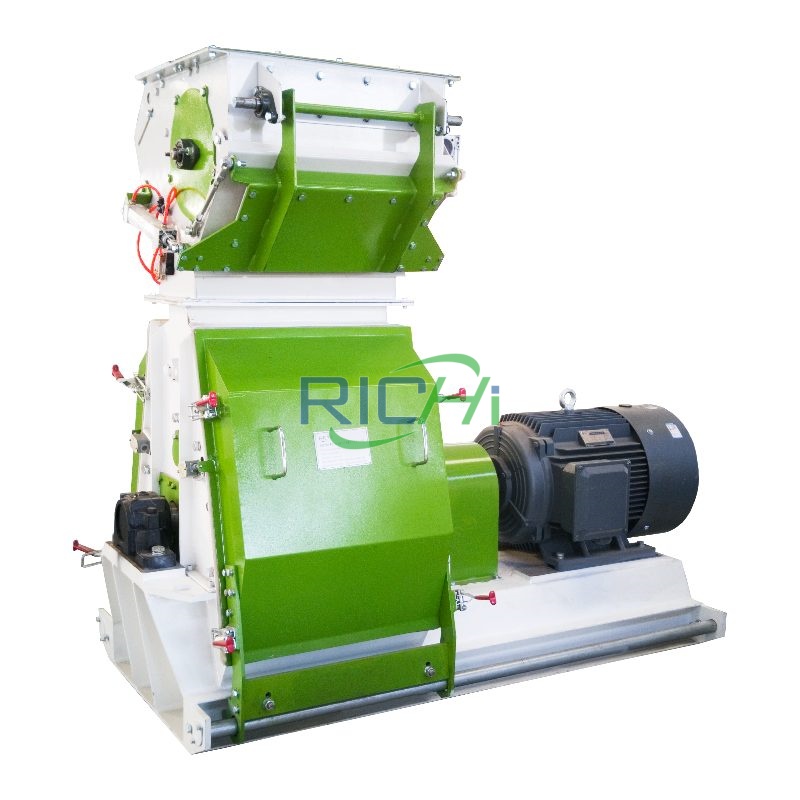
The chopped wood chips or pre-treated small pieces of raw material are fed into a hammer mill for further processing, where they are crushed into 3–5mm pellets to meet pelletizing requirements and ensure uniform pellet size.
3. Drying Section
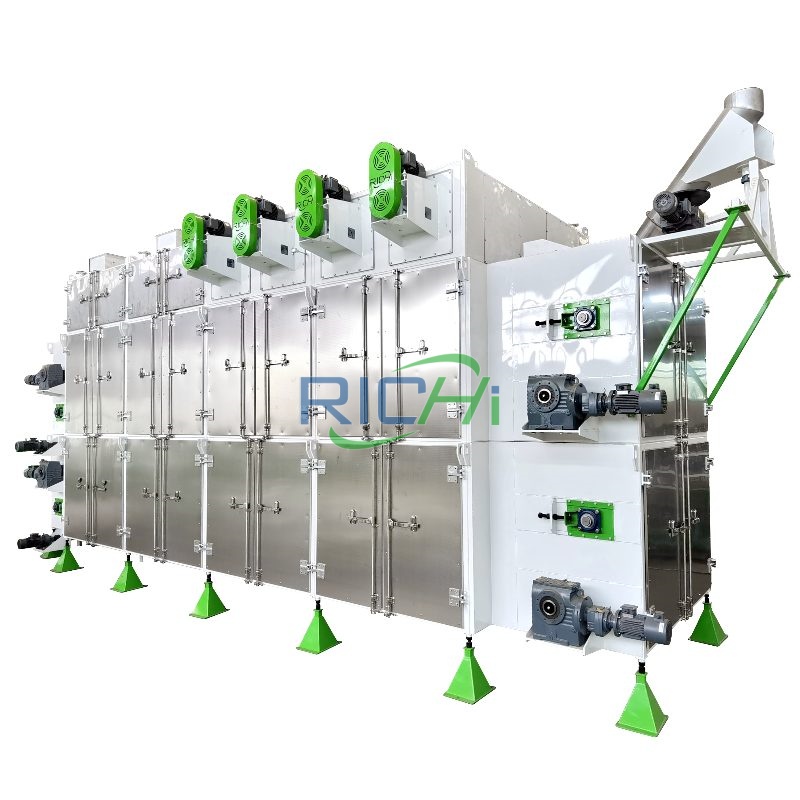
Excessive or low moisture content in the raw materials can affect pellet quality, so a dryer is used to maintain the moisture content within an appropriate range (typically 12–18%). By ensuring sufficient contact between the raw materials and the temperature and drum speed, this section ensures rapid, uniform, and stable drying, preparing them for pelletizing.
4. Pelletizing Section
The dried raw material enters the biomass pellet machine. The material is fed into the ring die through the feed port and forced into the die holes by the pressure of the rollers. Customers can choose from various die sizes to meet their specific needs, producing high-density cylindrical pellets ranging from 2 to 12 mm.
5. Cooling & Screening Section
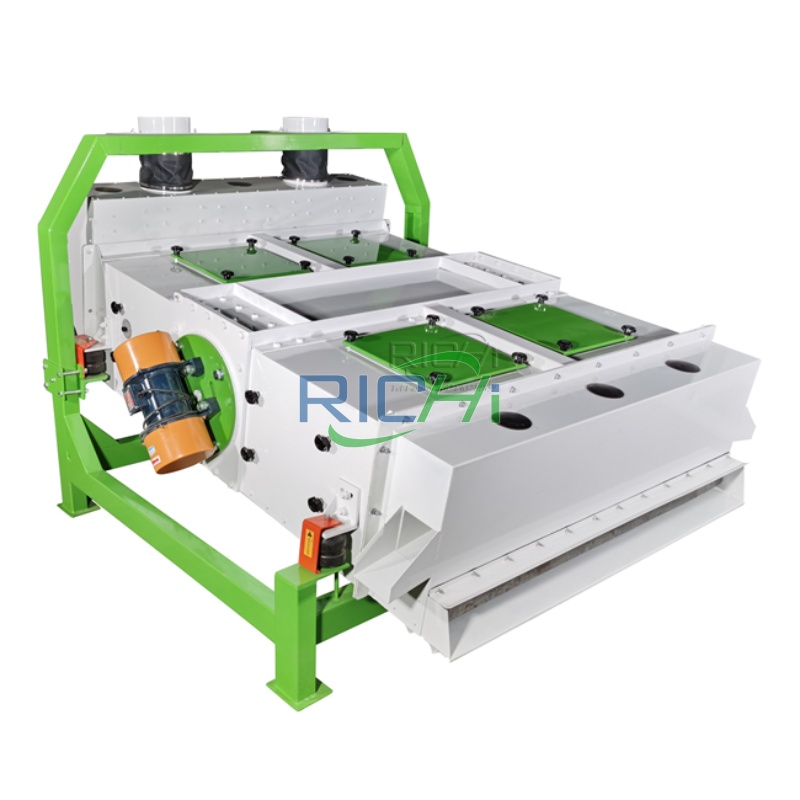
Newly produced pellets have temperatures as high as 70–90°C and high humidity, making them prone to deformation and mold. A countercurrent cooler is required to quickly reduce the pellet temperature, while a vibrating screen separates qualified pellets from debris and fines. Substandard pellets are returned to the pelletizing stage for reprocessing, improving raw material utilization and reducing waste.
6. Packing Section
The cooled pellets are weighed, bagged, and sewn by an automated packaging system. Packaging specifications can be customized according to customer requirements. The final product can be used for storage, transportation, heating, industrial fuel, and other applications.
The Biomass pellet making plant efficiently processes raw materials into high-quality biomass fuel pellets through processes including raw material pretreatment, crushing, drying, pelletizing, cooling, screening, and packaging. Appropriate equipment selection and optimized production processes ensure consistent pellbiomass pellet plantbiomass pellet making plant is not only economically viable but also environmentally friendly, making it a wise choice for sustainable development.
Main Equipment In The Biomass Pellet Making Plant
Each piece of equipment in the biomass pellet production process plays a specific role in efficiently and stably converting raw materials into high-quality pellets. Proper equipment selection and configuration not only ensures stable production, but also reduces energy consumption and improves pellet quality.





How to Build a Complete Biomass Pellet Making Plant?
With the growing global emphasis on renewable energy and environmental protection, biomass pellets are gaining popularity due to their high efficiency, ease of transportation, and wide application, making them one of the most promising alternatives to fossil fuels.
Building a biomass pellet manufacturing plant is not just a simple combination of equipment. It requires comprehensive planning of site selection, raw material preparation, equipment configuration, and process optimization to ensure stable production efficiency and high-quality pellets.


Raw Material Procurement and Preparation
Stable and reliable raw materials are the foundation of high-quality pellets. Common raw materials include wood chips, sawdust, straw, and crop waste. These materials should be pre-treated to remove stones, metal fragments, and other impurities.
Proper preparation ensures uniform pellet density, reduces equipment wear, and improves the efficiency of subsequent processes.
Equipment Selection and Layout
Appropriate equipment selection is crucial. Core equipment includes crushers, dryers, pellet mills, cooling systems, screening systems, and packaging machines.
The layout should ensure smooth material flow throughout each process, reducing handling and maximizing space utilization. A reasonable configuration ensures efficient production and consistent pellet quality.
Production Process Design
An efficient production process is key to smooth operations. The typical process is: raw material pre-treatment → crushing → drying → pelletizing → cooling and screening → packaging.
Using conveyors, feed bags, or pneumatic conveying systems maintains a continuous material flow, reduces labor, and avoids production bottlenecks.
Personnel Training and Safety Management
Factory operations rely on skilled operators. Training operators in equipment operation, routine maintenance, and emergency response ensures smooth production line operation.
At the same time, strict safety measures can effectively reduce accident risks, extend equipment life, and maintain stable pellet production.
Auxiliary Systems and Energy Management
A stable energy supply and auxiliary systems are the foundation for continuous production. A long-term biomass pellet making plant requires scientifically designed and well-maintained power, compressed air, cooling water, and dust removal systems.
Efficient management reduces downtime, ensures safe operation, and guarantees consistent pellet quality.
In short, building a biomass pellet making plant requires not only high-quality equipment but also a well-planned, customized overall solution. RICHI Machinery specializes in tailoring our customers’ specific needs, providing optimal turnkey biomass pellet production line solutions, whether for a small-scale line for local heating or a large-scale plant for export and power generation.
Our professional engineering team provides comprehensive technical support, from preliminary design and plant layout planning to on-site installation and personnel training. By fully understanding your feedstock type, target production capacity, and local market conditions, RICHI’s customized design ensures stable equipment operation, high yields, and significant economic benefits.
From project inception to final production, we will help you efficiently and cost-effectively convert agricultural and forestry waste into clean, renewable energy.
Project Cases of Biomass Pellet Making Plant Around the World
RICHI Machinery has successfully designed and built various types of biomass pellet making plants in numerous countries and regions. Each project is tailored to the client’s feedstock type, production requirements, and local conditions. From small production lines to large commercial plants, RICHI provides comprehensive solutions encompassing process design, equipment manufacturing, installation guidance, and personnel training. These real-world cases fully demonstrate RICHI’s extensive experience, advanced technology, and commitment to sustainable development.
RICHI Machinery has over 30 years of experience in equipment manufacturing, with projects spanning over 140 countries and regions worldwide. Whether for medium- to large-scale farms or commercial feed mills of various sizes, we can provide customized pellet plant solution tailored to your specific needs, achieving the best cost-performance ratio, ensuring stable operation, and delivering a high return on investment.
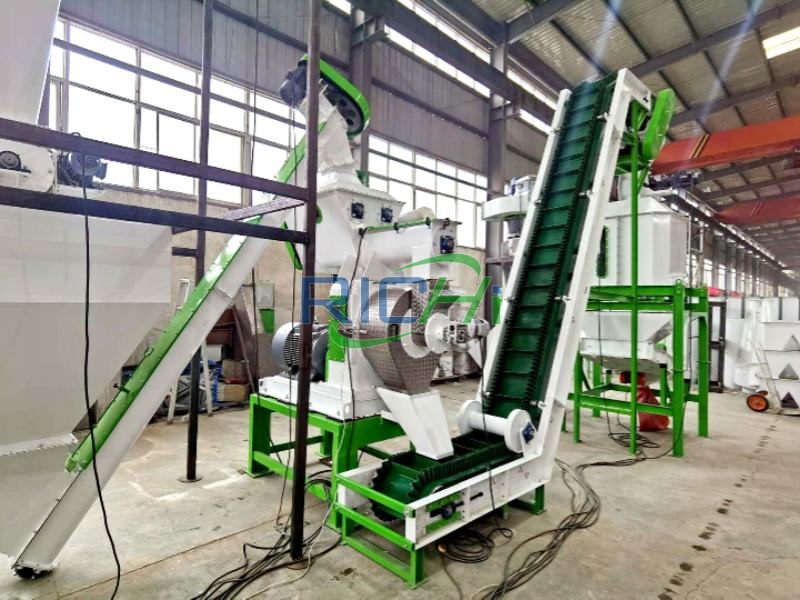
Biomass Pellet Making Plant in Mauritius
- Project country: Mauritius
- Project output: 2-3T/H
- Raw materials: Sugarcane bagasse, sawdust, coconut shells
- Project background: This client, a renewable energy company in Mauritius, is committed to fully utilizing agricultural waste. Due to the tropical climate, a large amount of sugarcane waste is generated annually. RICHI provided the client with a 2–3 ton/hour biomass pellet production line suitable for high-humidity environments, converting agricultural byproducts into clean fuel for industrial boilers.

Biomass Pellet Plant in Canada
- Project country: Canada
- Project output: 3T/H
- Raw materials: Pine, spruce, wood sawdust
- Project background: This project is located in Alberta, Canada, a province rich in forestry resources and abundant sawmill byproducts. The client sought to convert wood waste into high-value biomass fuel for local heating and export. RICHI designed this highly efficient, energy-efficient 3-ton/hour full automatic biomass wood pellet line in Canada to ensure stable operation in this cold climate.

Biomass Pellet anufacturing Plant in Malaysia
- Project country: Malaysia
- Project output: 1.5T/H
- Raw materials: Palm kernel shells, rice husk, sawdust
- Project background: Malaysia’s thriving palm oil industry generates a significant amount of palm waste annually. A client sought to recycle this byproduct into biomass fuel pellets for small and medium-sized boilers and local energy companies. RICHI customized a compact 1.5 ton/hour production line specifically for this client, offering energy-efficient, high efficiency, and easy maintenance.

Biomass Pellet Making Plant in Romania
- Project country: Romania
- Project output: 5T/H
- Raw materials: Beech, oak, pine sawdust, and small quantities of wood chips collected from local sawmills
- Project background: A Romanian wood processing company, facing a long-standing problem of generating large quantities of sawdust and wood scraps, decided to invest in a 5-ton/hour biomass pellet production line to improve resource utilization and meet European market demand for sustainable heating fuels. RICHI provided a fully automated production solution, successfully converting wood waste into clean energy pellets to export-grade standards.
Why Choose RICHI Biomass Pellet Making Plant?
Choosing the right manufacturer is key to ensuring the long-term stability, efficiency, and profitability of your biomass pellet production project. Leveraging years of technical expertise and project experience in the biomass energy sector, RICHI Machinery has become a trusted global provider of comprehensive biomass pellet solutions. We provide not only equipment but also complete intelligent production systems tailored to your individual needs.
Customized Design Solutions
Every biomass pellet project is unique. The RICHI engineering team tailors the plant layout and process flow based on feedstock type, moisture content, climate conditions, and power availability. From small 0.3 ton/hour production lines to large 40 ton/hour plants, we ensure every detail meets customer needs.
Advanced Equipment & Stable Performance
RICHI’s pellet equipment products, including pellet mills, dryers, and coolers, are manufactured from high-quality materials and undergo rigorous quality inspections. The entire production line operates smoothly, with low noise, minimal energy consumption, and a long lifespan, effectively ensuring production efficiency and pellet quality.
Complete Turnkey Service From Design to Production Start-up
From pre-project consultation and equipment design to on-site installation, operator training, and finally after-sales support, RICHI provides a complete one-stop turnkey service, allowing customers to easily start production without worrying about technical details.
In addition to providing high-quality equipment, RICHI Machinery turnkey service is customized according to customer needs to ensure that users can smoothly start biomass pellet production and achieve long-term profitability.
FAQ
When planning or investing in a biomass pellet making plant, customers often have many questions. To help you gain a more comprehensive understanding of the entire production process and make more informed decisions, we’ve compiled frequently asked questions and expert answers from global customers. Whether you’re a first-time investor or an experienced producer, these answers will provide you with a clearer perspective and help you successfully launch and efficiently operate your biomass pellet production project.
What is the biomass pellet making plant?
+
A biomass pellet making plant is a complete production system for processing agricultural and forestry waste into high-density biomass fuel pellets. The plant’s primary purpose is to convert low-value biomass feedstocks such as sawdust, wood chips, rice husks, straw, and corn stalks into a high-energy, clean, renewable energy source that can replace traditional fuels like coal and natural gas.
The entire biomass pellet production line typically includes raw material pretreatment, crushing, drying, pelletizing, cooling, screening, and packaging. It produces biomass pellets with a dense structure and high calorific value, which are widely used in home heating, industrial boilers, and biomass power generation.
In addition to significant environmental benefits, it also enhances the economic value of agricultural and forestry waste. It provides an efficient solution for waste reuse, promotes the development of local renewable energy industries, and contributes to the achievement of global carbon reduction targets.
How do I build the most suitable biomass pellet plant?
+
Choosing the right biomass pellet making plant is crucial for ensuring long-term profitability, production efficiency, and product quality. Because each customer’s feedstock type, investment budget, and production goals vary, a comprehensive decision must be made. A suitable production line not only ensures stable equipment performance but also effectively reduces operating and maintenance costs over the long term.
- Determine the feedstock type and moisture content: Different feedstocks require different processing methods. For example, wood chips and sawdust require pulverization and drying, while lightweight feedstocks like rice hulls and peanut shells may require a force-feed system. Before production, you should test the feedstock moisture content; ideally, a range of 12% to 18% ensures high pelletizing efficiency and consistent pellet quality.
- Determine production capacity and degree of automation: RICHI offers a variety of capacity configurations, ranging from 0.3 tons to 40 tons per hour, to accommodate projects of varying sizes. Small production lines are suitable for local heating fuel, while large plants are more suitable for commercial biomass energy operations. You can also choose a semi-automated or fully automated production system based on labor requirements and investment budget.
- Evaluate Energy Consumption and Cost-Effectiveness: Energy consumption is one of the most significant operating costs in pellet production. An efficient biomass pellet production line should minimize electricity consumption while maintaining stable output. By optimizing the drive system, adopting energy-saving motors, and intelligent control technology, RICHI helps customers save approximately 15% in electricity without compromising production capacity.
- Investigate Equipment Quality and Technical Support: A reliable supplier should not only provide durable equipment but also offer a comprehensive technical support system. Before purchasing, focus on the equipment materials, bearing and drive system quality, and warranty policy. RICHI provides comprehensive pre-sales consultation, plant layout design, installation guidance, operator training, and lifetime technical support to ensure worry-free operation.
- Consider Future Expansion and Local Condition: If you plan to expand production in the future, consider a modular and scalable design. RICHI’s biomass pellet making plant features a flexible design that allows for easy addition of production lines or changes in feedstock types. Furthermore, it’s important to consider local electricity standards, climate conditions, and the stability of feedstock supply to ensure continuous and sustainable production.
Choosing the most suitable solution requires a comprehensive assessment of feedstock type, production capacity, energy consumption, and supplier capabilities. Leveraging extensive industry experience, advanced technology, and a professional engineering team, RICHI Machinery can provide customized, comprehensive solutions tailored to customer needs, from project planning to smooth production.
Can a biomass pellet manufacturing plant deal with different raw material?
+
Yes, biomass pellet production lines can process a variety of different feedstock types. These include wood chips, sawdust, rice husks, straw, peanut shells, palm fiber, bamboo chips, bagasse, and other agricultural and forestry waste. The key lies in tailoring the crushing, drying, and pelletizing processes to the specific characteristics of the feedstock. For example, wood chips require a finer grind, while straw, due to its higher moisture content, requires a longer drying time. RICHI’s biomass pellet making plant is highly adaptable, allowing flexible switching between different feedstocks through modular configuration and process control, ensuring stable pellet quality and high production efficiency.
If I want to build a 5T/H biomass pellet making plant, what machines do I need?
+
To establish a 5-ton/hour biomass pellet-making plant, a complete set of production equipment, from raw material processing to finished product packaging, is required, tailored to production needs. This primarily includes a wood chipper for log crushing or a pulverizer for shredding small-sized raw materials, a drum dryer for moisture control, a biomass pellet machine for pelletizing, a pellet cooler for cooling and shaping the pellets, a vibrating screen for selecting qualified pellets, and an automatic packaging machine for weighing and packaging. Furthermore, auxiliary equipment such as dust removal systems, conveying equipment, silos, and electronic control systems are required to ensure efficient, continuous, and automated production line operation. RICHI can provide customized production solutions tailored to each customer’s raw material type and plant layout, ensuring optimal equipment performance and cost-effectiveness.

