
1 TON FEED MIXER FOR SALE
1 Ton Feed Mixer for Sale – We sell various types of 1-ton feed mixers, designed specifically for livestock farms and feed processing enterprises. They feature high mixing efficiency, good uniformity, and simple operation, effectively improving production efficiency and reducing labor costs.
RICHI Manufacture offers factory-direct sales of feed mixing equipment. Our equipment is of high quality, provides excellent mixing results, and is competitively priced. Inquiries are welcome; we will do our best to provide you with solutions.

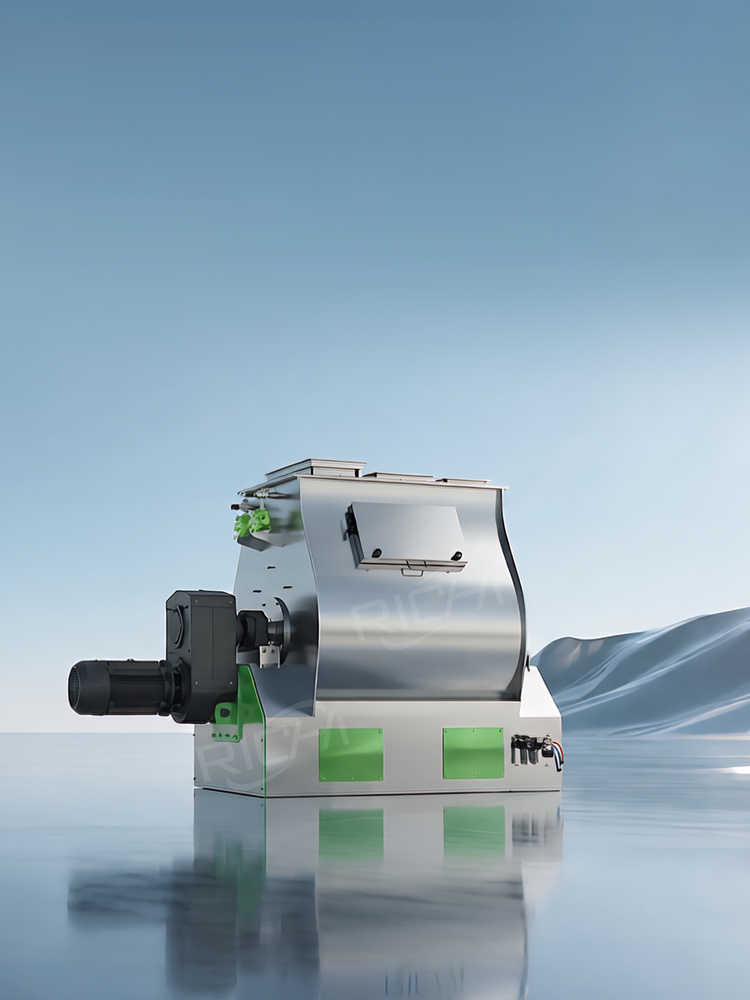
MULTIPLE TYPES OF HIGH-EFFICIENCY FEED MIXERS
We have designed various types of high-efficiency feed mixers to meet different mixing needs. The following is a detailed introduction to our various high-efficiency mixers.
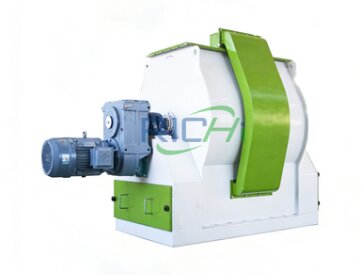
SLHJ Series Single Shaft Double Paddle Mixer
The SLHJ series single-shaft paddle mixer is suitable for mixing feed, chemicals, organic fertilizers, and viscous materials. The equipment includes a casing, cover, paddle shaft, unloading mechanism, motor reducer, transmission mechanism, and air outlet.
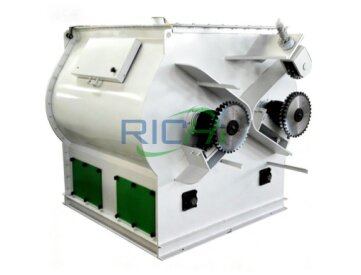
SLHSJ Series Twin Shaft Paddle Mixer
The SLHSJ series twin-shaft paddle mixer is widely used in industries such as feed, grain, food, chemical, pharmaceutical, and pesticide mixing for powdery, granular, flake, block, mixed, and viscous materials, achieving efficient and uniform mixing.
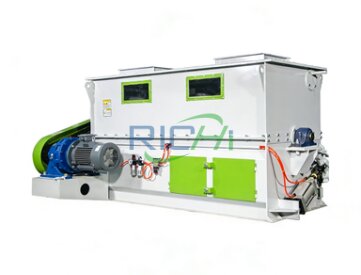
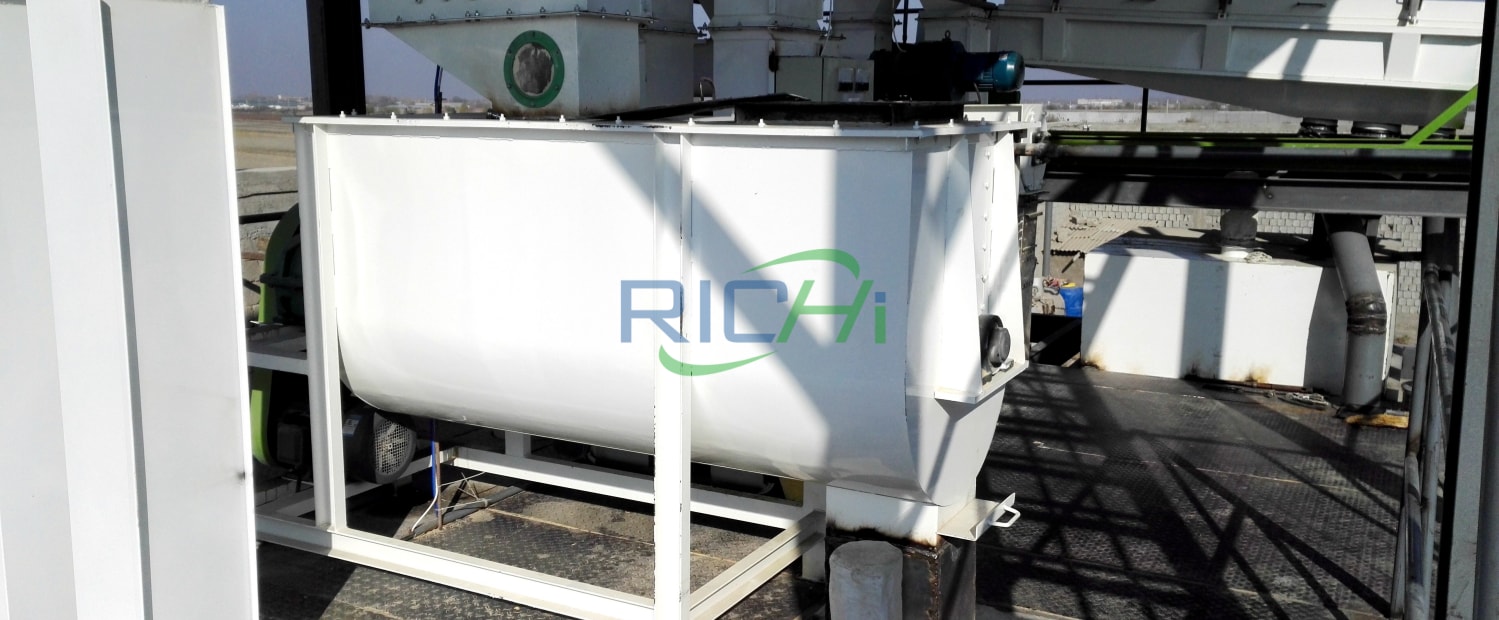
SLHY Series Single Shaft Double Ribbon Mixer
The SLHY series single-shaft double ribbon mixer is widely used in small and medium-sized feed mills to mix powdery materials, ensuring uniform distribution of the mixture and guaranteeing the quality of compound feed.
TECHNICAL SPECIFICATIONS
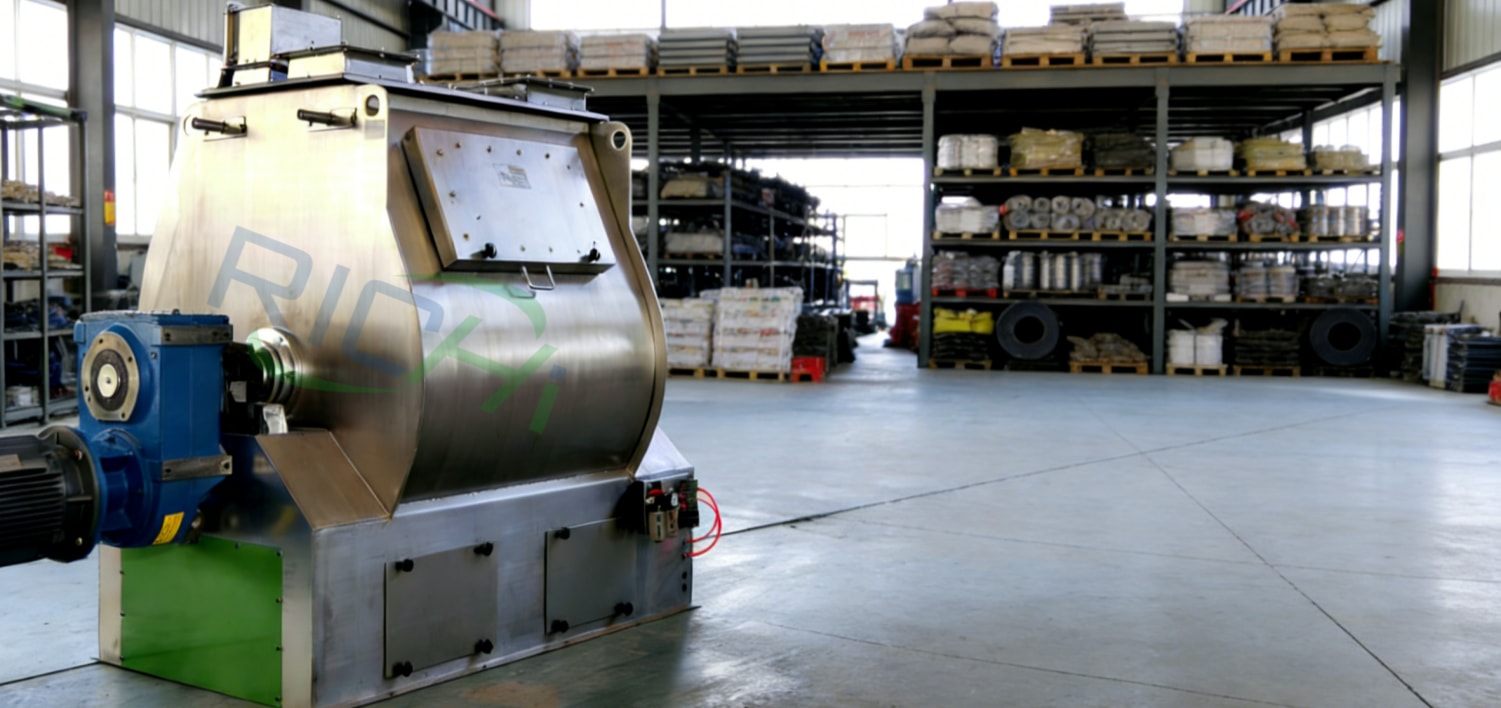
SLHJ Series Single Shaft Double Paddle Mixer
Motor Connection: Direct Connection
Materials: Carbon steel / Stainless steel
Power: 11–55 KW
Mixing Amount Per Batch: 500–3000 KG/P
Effective Volume: 1–6 m³
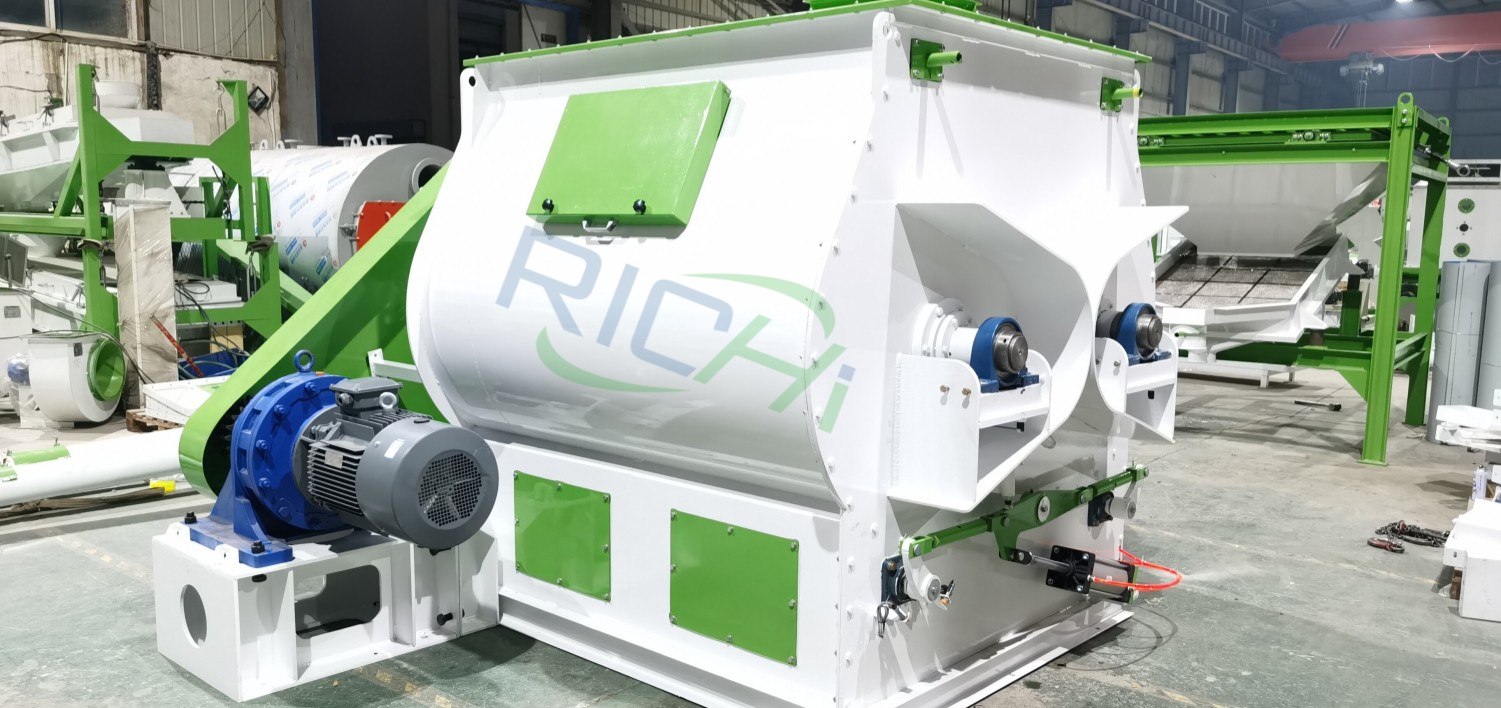
SLHSJ Series Twin Shaft Paddle Mixer
Motor Connection: Chain drive
Materials: Carbon steel / Stainless steel
Power: 5.5–30 KW
Mixing Amount Per Batch: 250–2000 KG/P
Effective Volume: 0.5-4 m³
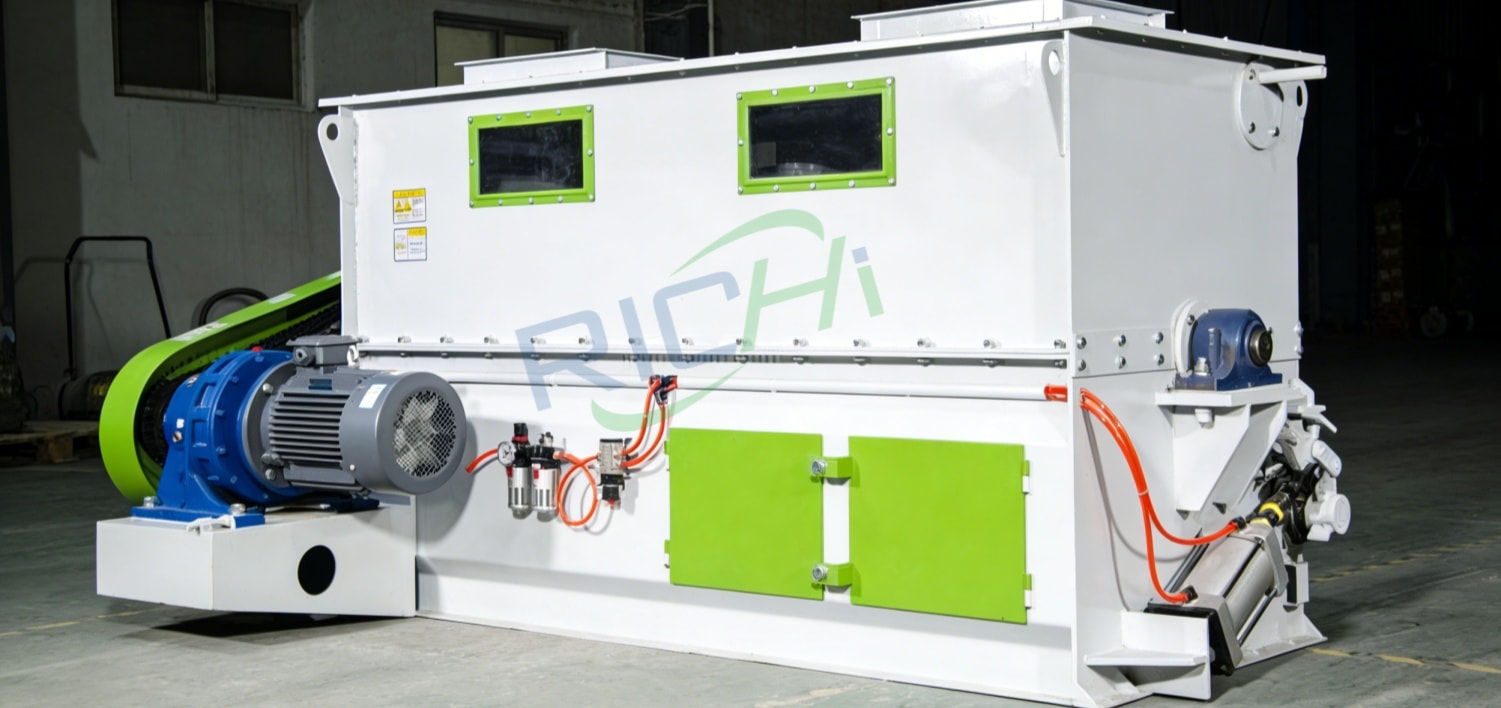
SLHY Series Single Shaft Double Ribbon Mixer
Power: 4-45KW
Mixing Amount Per Batch: 250-3000 KG/P
Effective Volume: 0.5-7.5 m³
GLOBAL FEED MIXER PROJECTS
RICHI Manufacturing has accumulated over 30 years of technical expertise and experience since its founding in 1995. Its branded equipment is used in more than 140 countries and regions around the world, providing satisfactory solutions to more than 2,000 customers. Below are some project examples.
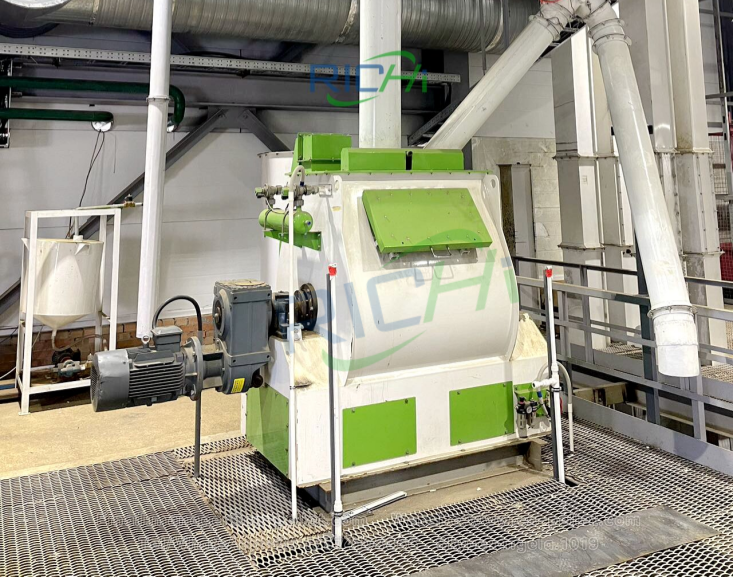
Brazil 1 Ton Feed Mixer Project
This project involved a feed mixer for a large broiler feed mill in Brazil’s southern aquaculture zone. The existing feed mixer suffered from low mixing efficiency and uneven mixing, necessitating a replacement. After extensive evaluation, RICHI was chosen.
The client required the new mixer to improve mixing uniformity and ensure consistent distribution of vitamins and trace elements. Following equipment testing and mixing inspections, the mixing effect fully met the client’s requirements, and the project was successfully completed.
The client’s main raw materials included corn flour, soybean meal, wheat bran, fish meal, premixes, and oils. Our single-shaft, dual-paddle mixer was perfectly suited for processing these raw materials. The client reported an approximately 15% increase in production efficiency and was very satisfied.
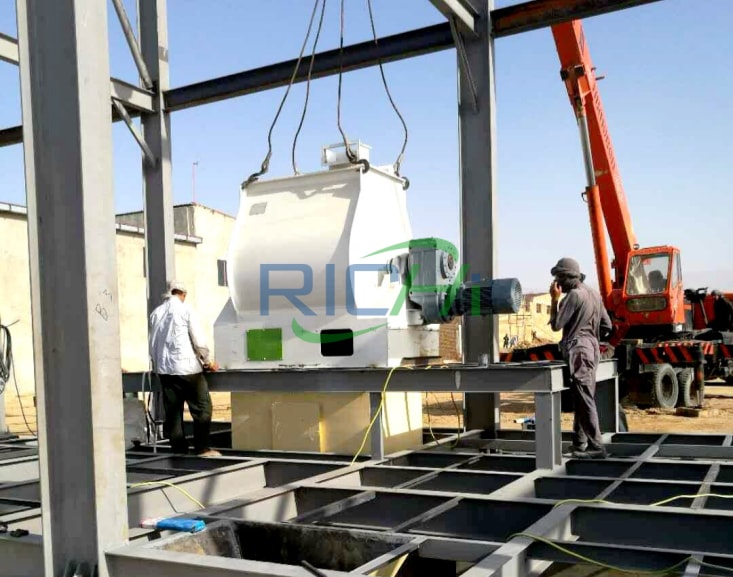
USA 1 Ton Feed Mixer Project
This project involved an American pet food company expanding its dog food production line. The project required processing various functional additives, such as probiotics and fat powder, demanding high mixing precision and batch-to-batch stability.
The main raw materials included corn gluten meal, chicken meal, animal fat, vitamin complexes, and functional additives. During initial trial runs, the client was very satisfied with the mixing performance of our equipment, and the project was successfully established.
Later, after further investigation, the client customized a complete pelleting production line to produce pelleted feed. This line included a single-shaft, dual-blade mixer. The client was extremely satisfied with both the individual mixer and the overall production line performance.
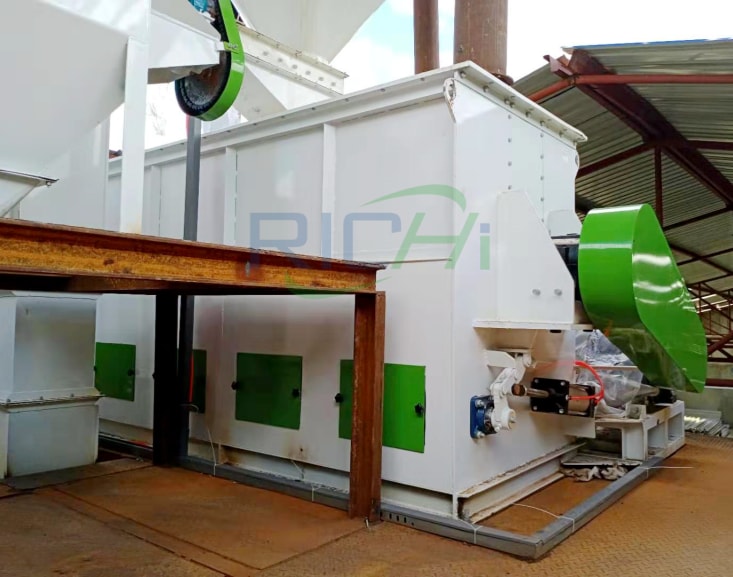
Norway 1 Ton Feed Mixer Project
This project was established at a Norwegian aquaculture feed processing plant. Norway has a well-developed salmon farming industry, and this project focused on the production of high-end aquaculture feed, requiring the processing of highly viscous raw materials.
The main raw materials included fishmeal, wheat flour, fish oil, fish solvent, phospholipids, and vitamins.
Our single-shaft double-ribbon mixer significantly improved the stability of the feed for the client. In addition to the mixer, the client also purchased our fish feed pellet mill and other related equipment. Using these together further enhanced the pelleting effect, and the client’s feedback was very positive.
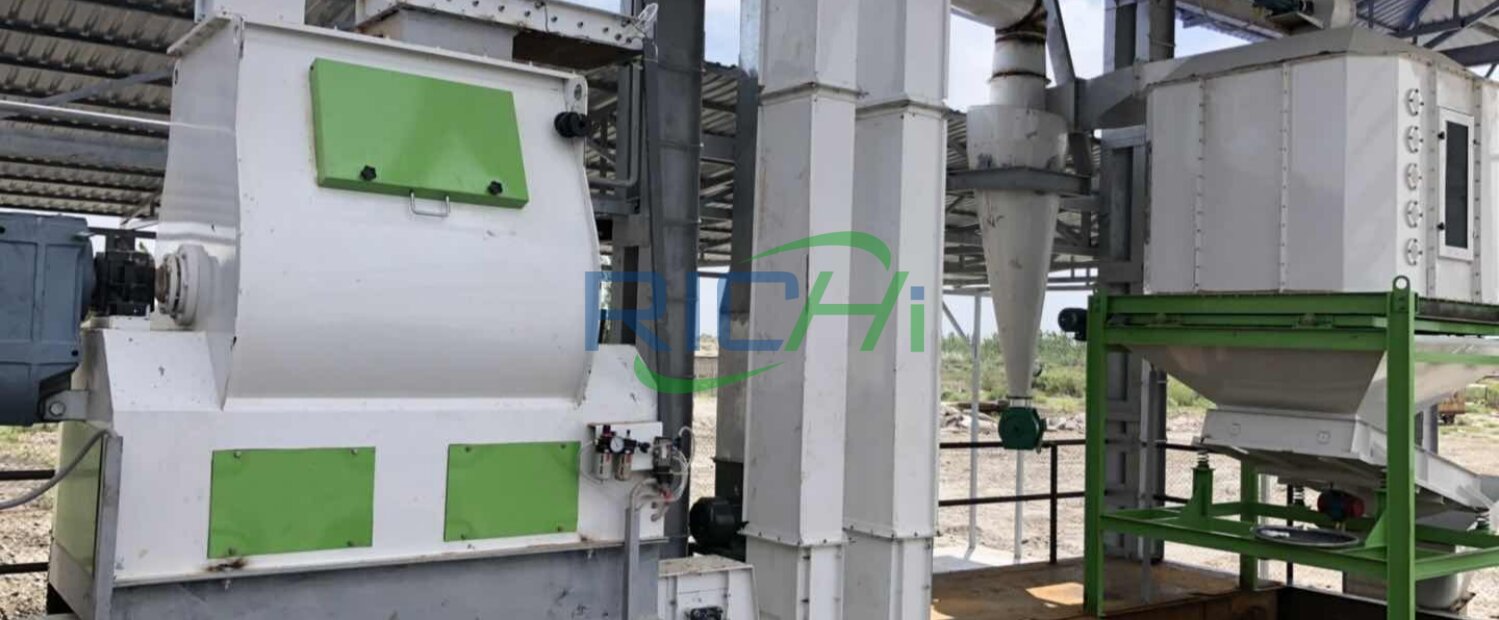
VIDEOS OF OUR 1 TON FEED MIXERS FOR SALE
To help you better understand our equipment, we have prepared several videos to demonstrate our feed mixers in a clear and intuitive way.

FAQ
FREQUENTLY ASKED QUESTIONS
If you want to maximize your investment return with our equipment, please feel free to contact us anytime. We will provide the most suitable solution for your needs.
+
What role does a feed mixer play in a production line?
Feed mixers are one of the core pieces of equipment in feed production lines. They are used to uniformly mix raw materials such as corn, soybean meal, wheat bran, vitamins, and minerals to ensure consistent nutritional composition. This directly affects whether the feed has balanced nutrition and whether animals will have good growth results after consuming it.
+
How long does it take to mix one batch?
A single-shaft double-paddle mixer or a double-shaft paddle mixer typically takes 1-3 minutes to mix a batch of material; a single-shaft double-ribbon mixer typically takes 3-5 minutes. The higher the material loading, the longer the mixing time will generally be. Furthermore, the mixing time is also affected by the density and particle size differences of the raw materials.
+
Can liquid be added?
Liquids can be added. Supports spraying oil, adding water, molasses, etc.
+
How to choose a suitable mixer?
Choosing a suitable mixer requires considering four key factors: capacity, raw material characteristics, mixing accuracy, and maintenance costs. Please tell us your detailed needs and specific circumstances, and we will recommend a suitable mixer for you.
+
Which is better, manual discharge or pneumatic discharge?
In terms of material discharge methods, manual and pneumatic discharge each have their advantages and disadvantages. Manual discharge has a simple structure, low cost, and convenient maintenance, making it suitable for low-volume production or applications with low automation requirements. Pneumatic discharge, on the other hand, is less labor-intensive and more efficient, especially advantageous in situations requiring frequent material discharge or large-scale production. Overall, if stability and low cost are prioritized, manual discharge is more suitable; if efficiency and automation are emphasized, pneumatic discharge is better.
+
Is equipment maintenance complicated?
Our mixers are not complicated to maintain. Our design prioritizes durability and ease of operation. Routine maintenance mainly involves periodically cleaning the mixing chamber, inspecting seals, and lubricating transmission components. Replacing wear parts is also relatively simple. Operators only need to perform routine maintenance as required, typically without needing complex professional skills. This ensures long-term stable operation of the equipment while reducing maintenance costs.

