

Animal Feed Pellet Mill
Animal feed pellet mill is an essential equipment in modern feed pellet production line, which can press raw materials such as corn, soybean meal and forage into nutritionally balanced feed pellets. It improves feed conversion rates, reduces waste, and supports efficient large-scale production.
-1.jpg)
-1.jpg)
-1.jpg)

what is an Animal Feed Pellet Mill?
— Richi Machinery —
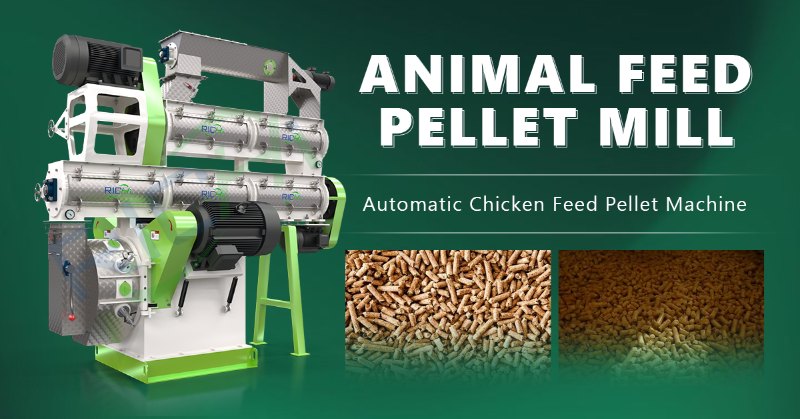
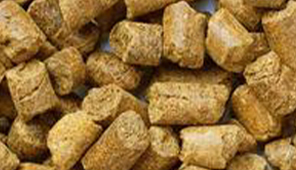
An animal feed pellet mill is a feed pelletizing machine that compresses loose powdered raw materials into compact, uniform pellets sized 2-12mm. Common raw materials include corn, wheat, soybean meal, rice hulls, alfalfa, forage grass, and various vitamins and additives.
In modern animal husbandry, animal feed pelleting mills can be used to produce poultry feed, livestock feed, ruminant feed, and aquaculture feed. They are suitable not only for medium- to large-scale farms but also for feed mills of all sizes. Their versatility and efficiency make them an indispensable key piece of equipment in the feed industry.
RICHI offers a variety of models with capacities ranging from 1 t/h to 40 t/h to meet the needs of various production scales. The machine can customize the die diameter according to the animal species, adapting to a variety of feed processing needs, and has been widely recognized by many farmers and feed mills.
Production capacity
1-40 T/H
particle Size
2-12 mm
RICHI MACHINERY
Working Principle of the Animal Feed Pellet Mill
Check more information on our Youtube channel.
Animal feed pellet mills play a vital role in modern feed processing, transforming a variety of raw materials into high-quality feed pellets that are easy to store, transport, and digest. Understanding their working principles can help customers better understand the science behind pelleting and make more informed decisions when purchasing equipment.
- Feeding: The crushed and mixed feed ingredients are evenly fed into the pellet mill’s pressing chamber via a feeding device.
- Roller Pressing: Within the pressing chamber, heavy rollers rotate continuously, pressing the material layer tightly against the surface of a ring or flat die. The die is equipped with numerous uniformly distributed small holes, which serve as channels for the material to be extruded and formed.
- Pellet Shaping: Under the combined effects of high pressure, friction, and heat, the feed is forced through the die holes. During this process, the starch gelatinizes and the protein denatures, gradually forming continuous cylindrical strands.
- Cutting: After the strands are extruded from the die holes, they are immediately cut by sharp rotating cutters mounted on the outside of the die, forming pellets of uniform length, which can be adjusted according to the desired setting.
RICHI MACHINE
Core Components & Performance Features Of Animal Pellet Mill
Understanding the main components of an animal feed pellet mill is crucial to understanding how the equipment operates and choosing the right model. Each component performs a specific function in the pelleting process, working together to ensure that the final pellets are uniform, strong, and of high quality.

Advantages Of RICHI Animal Feed Pellet Mill
RICHI animal feed pellet mill machines are designed to make feed production faster, more efficient, and more reliable. By understanding their key advantages, you can understand why so many farms and feed mills around the world trust RICHI. Here are some of the core advantages that RICHI equipment offers over standard equipment.
High Efficiency
It works fast and continuously, making lots of feed pellets in a short time. It helps farms save time and increase production.
Wide Application
It can handle corn, soybean meal, grass, straw, and more, making it suitable for poultry, cattle, pigs, sheep, and even fish feed.
Durable and Reliable
It uses high-quality components such as SKF bearings and Siemens motors, and runs smoothly and durable with few failures.
Adjustable Pellet Size
You can easily change the pellet length and diameter using the knife handle and dies, so the feed fits different animals’ needs.
Energy Saving
It uses less electricity while still producing a lot of feed, which helps reduce costs for farms and feed factories.
Easy Maintenance
Its simple design makes cleaning and maintenance easy, saving time and reducing repair costs.
RICHI MACHINERY
Specifications & Parameters of Animal Feed Pellet Mill for sale
When choosing the right animal feed pellet mill, it’s important to understand its technical specifications and performance parameters. RICHI Machinery offers a wide range of pellet feed mill machines with varying capacities to meet your specific needs. The following sections will provide a clear overview of the key specifications and parameters of our pellet mills.
| Model | SZLH250 | SZLH320 | SZLH350 | SZLH420 | SZLH508 | SZLH558 | SZLH678 | SZLH768 |
| Main motor power (kW) | 22 | 37 | 55 | 110 | 160 | 185 | 250 | 315 |
| Feeder power (kW) | 1.1 | 1.5 | 1.5 | 1.5 | 1.5 | 1.5 | 1.5 | 2.2 |
| Conditioner Power (kW) | 1.5 | 4 | 4 | 7.5 | 7.5 | 11 | 11 | 11 |
| Ring die diameter (mm) | 250 | 320 | 350 | 420 | 508 | 558 | 673 | 762 |
| Finished pellet diameter (mm) | 2~12 | |||||||
| Output (t/h) | 1.0-1.5 | 3-4 | 5-6 | 10-12 | 15-16 | 20-22 | 30-33 | 38-40 |
If you need help to choose the right model, please contact us and tell us your daily output needs, we’ll recommend the best type match to you.
Global Project of Animal Feed Pellet Mill
— RICHI Machinery —
With 30+ years of experience in the feed machinery industry, RICHI pellet equipment products have been successfully installed and put into operation on farms and feed mills in over 140 countries and regions worldwide. These international projects demonstrate the reliability, efficiency, and adaptability of our equipment in diverse climates, raw materials, and production scales. By exploring these real-world application cases, you can gain a clearer understanding of how our equipment meets the diverse needs of our global customers.
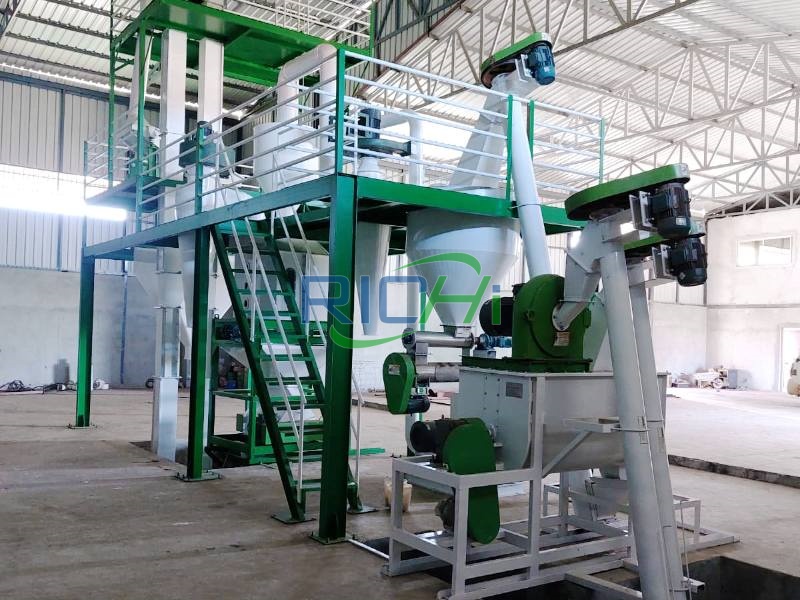
Animal Feed Pellet Mill for sale angola
- Project Name: animal feed mill plant
- Project Country: Angola
- Capacity: 2T/H
- Raw Materials: Corn, soybean meal, sunflower seed cake
- Project Background: Despite the rapid development of the livestock industry in Angola, local farmers have long relied on expensive imported feed. To reduce costs, a local agricultural company invested in a 2-ton/hour animal feed pelleting line. This project utilizes local corn and oilseed meal resources, effectively reducing feed costs while improving the nutritional quality of poultry and cattle, helping farmers achieve greater economic returns.
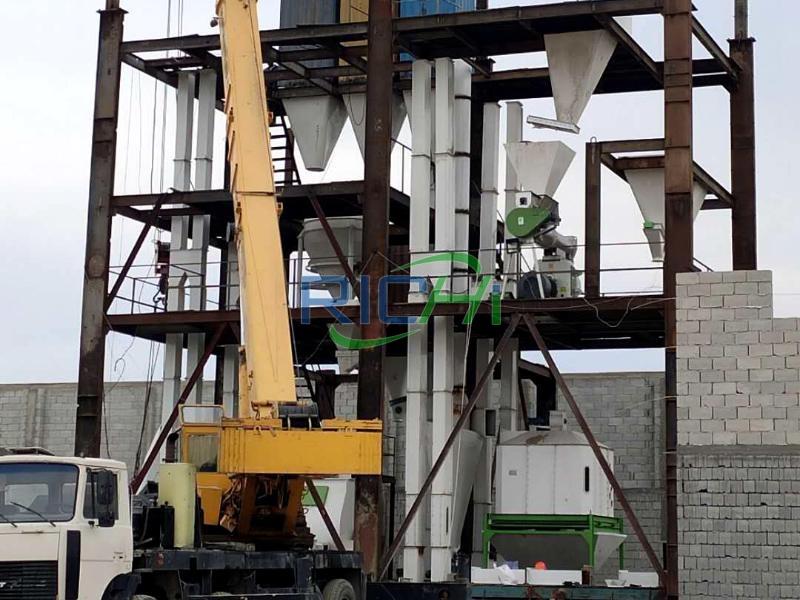
pellet feed mill machine for sale Uzbekistan
- Project Name: fish feed mill plant
- Project Country: Uzbekistan
- Capacity: 10T/H
- Raw Materials: Corn, soybean meal, fish meal, wheat bran
- Project Background: In Uzbekistan, the aquaculture industry is rapidly developing due to increasing demand for fish. A local customer invested in a 10-ton/hour fish feed pelletizing plant. This system processes corn, soybean meal, fish meal, and bran into floating and sinking pellets. With its stable pellet quality and adjustable pellet diameter, this project helps farmers improve feed conversion rates, reduce production costs, and ensure a stable year-round feed supply.

Animal Feed Pellet Mill for sale tanzania
- Project Name: animal feed processing plant
- Project Country: Tanzania
- Capacity: 1.5T/H
- Raw Materials: Maize, cottonseed cake, grass powder
- Project Background: Tanzania has a long tradition of cattle and sheep farming, but dry season feed shortages severely constrain productivity. This client invested in a 2-ton/hour feed pelleting line to ensure year-round feed supply. By processing corn and grass meal into pellets, the project improves feed storage conditions, reduces waste, and increases livestock growth, providing a practical solution for small-scale livestock farmers.

animal feed pelleting mill for sale malaysia
- Project Name: animal feed pellet plant
- Project Country: Malaysia
- Capacity: 3T/H
- Raw Materials: Corn, rice husk, palm kernel cake, fish meal
- Project Background: Aquaculture and poultry farming are important industries in Malaysia. To meet the growing demand for high-quality feed, this customer invested in a 3-ton/hour feed pelleting line. The system can process a variety of raw materials, including palm by-products and rice husks, transforming agricultural by-products into valuable feed. This project not only improves feed utilization efficiency but also promotes sustainable resource utilization.
How it Ensures Efficiency and Quality in Pellet Production Line?
In modern pellet production lines, every piece of pellet equipment plays a vital role in ensuring smooth production and product quality. Among them, the animal feed pellet mill is one of the indispensable links. Taking this 5-7 ton/hour animal feed pellet production line as an example, each piece of equipment operates in a coordinated process, from raw material receiving, crushing, and mixing to pelleting, cooling, and packaging. The entire process is seamlessly linked.

- Receiving Section: After receiving, the raw materials undergo cleaning and preliminary processing before entering the crushing stage.
- Crushing Section: SFSP feed hammer mills pulverize the raw materials into a fine powder to ensure optimal pelleting.
- Mixing Section: The various raw materials are evenly blended in a feed mill mixer, and nutrient premixes may be added to ensure nutritional balance in each pellet.
- Pelleting Section: The mixed powdered feed enters the conditioner, where steam and heat soften the raw materials. The conditioned feed then enters the feed granulator machine‘s pressing chamber. Under high pressure and high temperature, it is extruded through the die, forming dense, uniform cylindrical pellets. A cutting device then cuts the pellets into the desired length. This is the core process of the production line, directly determining the quality, shape, and firmness of the final pellets.
- Cooling Section: Hot pellets are transferred to a pellet cooler machine, reducing temperature and moisture content. This prevents deformation, breakage, and microbial growth during storage.
- Packaging Section: The cooled pellets are screened to remove fines, then weighed and packaged by animal feed bagging machine for transportation and sale.
As shown in this production line, the animal feed pellet mill is not only a supporting equipment, but also an important link in ensuring product quality and production efficiency. A properly designed animal pellet mill can provide an efficient and cost-saving solution for medium to large farms and feed mills of all sizes.
Frequently asked questions

What raw materials can be used in an animal feed pellet mill?
It is widely used in the feed processing industry due to their adaptability and ability to process a wide variety of raw materials. Generally speaking, raw materials are categorized into grains, proteins, fibers, animal by-products, and additives, with formulations tailored to the specific animal. With proper comminution and mixing, nearly any agricultural by-product can be processed into pelleted feed, making this equipment highly efficient and adaptable to a variety of production environments worldwide.
How to Choose the Right model?
Choosing the right animal feed pellet mill requires balancing production needs, raw materials, and budget. First, consider the required production capacity, whether for medium- to large-scale farms or feed mills of various sizes. Next, confirm whether the equipment can handle the raw materials you plan to use, such as corn, wheat, soybean meal, or hay. Also consider motor power, die specifications, and the durability of key components, as these factors directly impact pellet quality and the equipment’s lifespan. It’s also crucial to choose a supplier with extensive experience, comprehensive after-sales service, and the ability to provide customized solutions. By comprehensively evaluating these factors, you can select an efficient and reliable feed pellet mill for long-term, stable performance.
How much does an animal feed pellet mill cost?
Animal feed pellet machine price ranges widely, generally ranging from US$7,000 to US$850,000, depending primarily on production capacity, equipment configuration, and degree of automation. For farmers or small- to medium-sized feed producers, smaller, lower-volume equipment is often a more economical option. Larger feed mills, on the other hand, require high-capacity, fully automated production lines encompassing multiple steps, including crushing, mixing, pelletizing, cooling, screening, and packaging, resulting in higher overall investment. Overall, equipment price is determined not only by production capacity but also by durability, energy efficiency, and long-term maintenance costs. Choosing the right pellet mill can ensure stable operation, reduce production costs, and improve efficiency while maintaining a reasonable investment.
Can an single machine be used in a complete production line?
Yes, an animal feed pellet mill can serve as the core equipment of a complete feed production line. In most modern feed mills, a pellet mill is typically integrated with other equipment to form a complete automated production system. The raw materials are first crushed in a grinder and then evenly mixed with vitamins, minerals, and additives in a mixer. This mixture is then fed into a pellet mill, where it is pressed into pellets under high temperature and pressure. After forming, the pellets are cooled to remove excess heat and moisture, then screened to ensure uniform particle size. Finally, they are packaged for easy storage or transportation. By integrating the pellet mill with other equipment such as crushing, mixing, cooling, screening, and packaging, feed production can be achieved not only with higher efficiency but also with guaranteed pellet quality and large-scale, stable production.