

bagasse pellet machine
A bagasse pellet machine is a specialized equipment used to compress sugarcane bagasse into high-density pellets. These pellets can be used as renewable biofuel or animal bedding, turning agricultural waste into valuable resources.

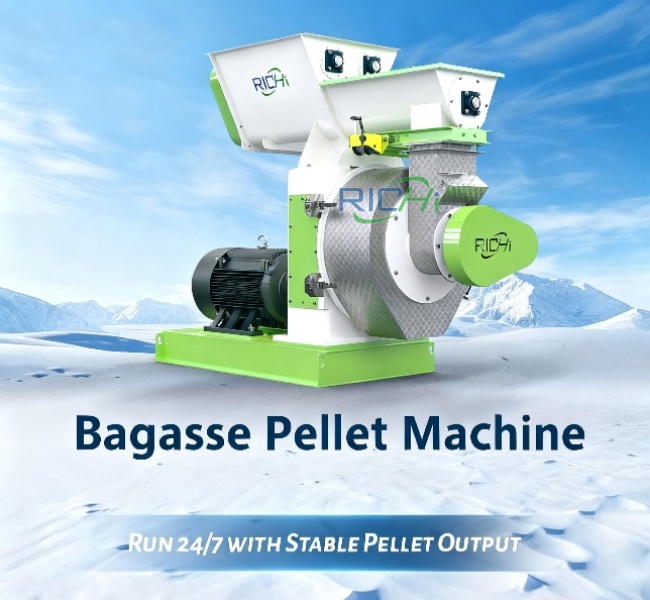
What is Bagasse Pellet Machine?
A bagasse pellet machine is a specialized pelletizing machine used to compress bagasse into uniform biofuel pellets. Pelletizing significantly reduces transportation costs while improving combustion efficiency.
Bagasse, a fibrous byproduct of sugarcane juice extraction, is bulky and low-density, making it difficult to store and transport in its raw form. The pellet machine addresses this problem by using high pressure and high temperature. The resulting pressure and friction soften the lignin in the bagasse, which acts as a natural binder, resulting in smooth, uniform cylindrical pellets with a diameter of 2-12 mm.
The bagasse pellet machine has a wide range of applications. Due to its high density, uniform pellets, and stable energy content, it is suitable for a variety of applications, including:
- Fuel pellet production plant: Bagasse pellets are an environmentally friendly renewable energy source that can replace coal or wood chip pellets. Bagasse pellet machines can be widely used in the production of this fuel pellets.
- Animal feed mill plant: Bagasse pellets can be mixed with other ingredients such as soybean meal, corn, or wheat bran to be used as livestock, poultry, or aquaculture feed.
- Livestock and poultry farms: It can be used to convert bagasse into highly absorbent bedding, improving the sanitation of livestock and poultry houses.
- Organic fertilizer production plants: After fermentation or composting, bagasse can be pelletized as a carrier or raw material for organic fertilizer production.
Overall, sugarcane bagasse pellets are not only a sustainable energy source but also a versatile material with applications in various sectors, including industry, agriculture, and homes.
Production capacity
0.2-40T/H
particle Size
2-12mm
Application Of the bagasse pellet
Bagasse pellets are an environmentally friendly and multifunctional product made from the residue after sugarcane pressing and are widely used in many fields.
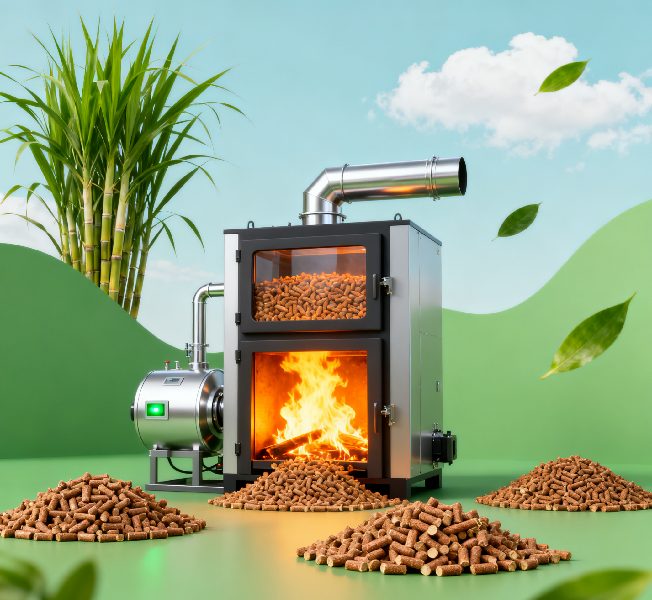
renewable fuels
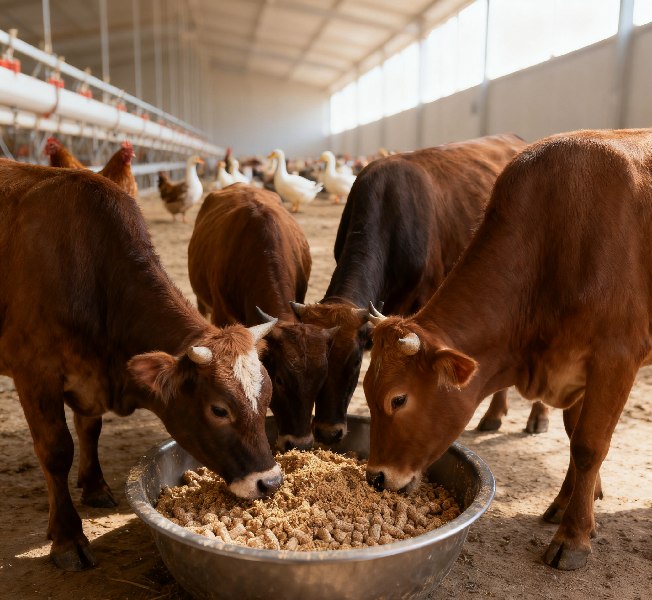
animal feed
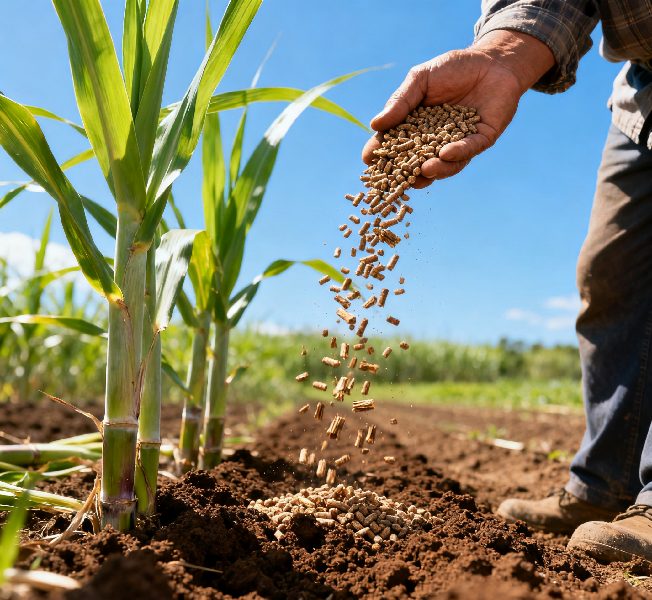
organic fertilizer

Home heating
In summary, bagasse pellets demonstrate broad application value across multiple sectors, delivering significant economic and environmental benefits. They not only efficiently utilize agricultural waste but also promote sustainable development. Furthermore, bagasse pellets can be used in a wide range of applications, including industrial raw materials and export trade, providing greater potential for industry innovation and growth.
RICHI MACHINERY
working principle of RICHI bagasse pellet machine
A bagasse pellet machine compresses loose bagasse fibers into dense pellets through pressure, friction, and the binding action of the natural lignin in the bagasse. The process primarily involves the following steps:
- Feeding: Pre-treated bagasse with an appropriate moisture content (typically 12–18%) is fed into the pelletizer’s pelletizing chamber at a controlled rate.
- Pressing: Rollers press the bagasse against a ring die, where high pressure forces the material through the die openings.
- Friction and Heat Generation: Friction between the rollers and the die generates heat, softening the natural lignin in the bagasse. The lignin acts as a binder, holding the fibers together without the need for chemical adhesives.
- Pellet Forming: The bagasse is extruded through the die openings into continuous, cylindrical strands.
- Cutting: Rotating or stationary knives cut the strands into pellets of the desired length, typically 2–12 mm in diameter.
- Discharging: The newly formed pellets are discharged from the pelletizer, ready for cooling, storage, or further processing.
This operating principle ensures high-density, uniform-sized, and durable pellets suitable for fuel, animal feed, or other uses.
RICHI MACHINERY
Technical features & highlights of our bagasse pellet machine
With the growing demand for renewable energy, this equipment can not only effectively reduce agricultural waste, but also produce clean fuel or be used as feed ingredients. To ensure long-term stable operation and economic benefits, it is designed with a number of advanced features to ensure its reliability, flexibility and ease of operation.
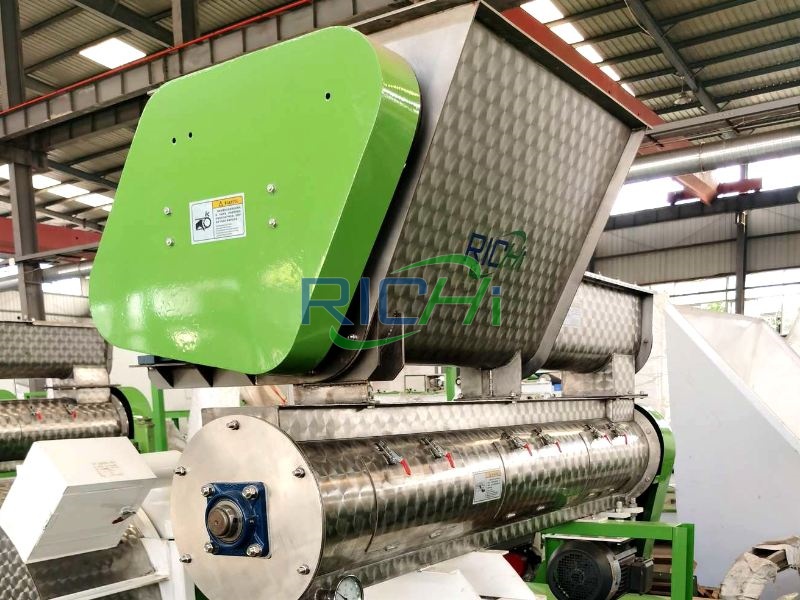
Forced Feeding System
The bagasse pellet machine utilizes a forced feeding system to ensure uniform material inflow, making it particularly suitable for lightweight, low-density bagasse fibers. This design reduces the risk of blockage, ensures smooth operation, and improves pellet consistency.
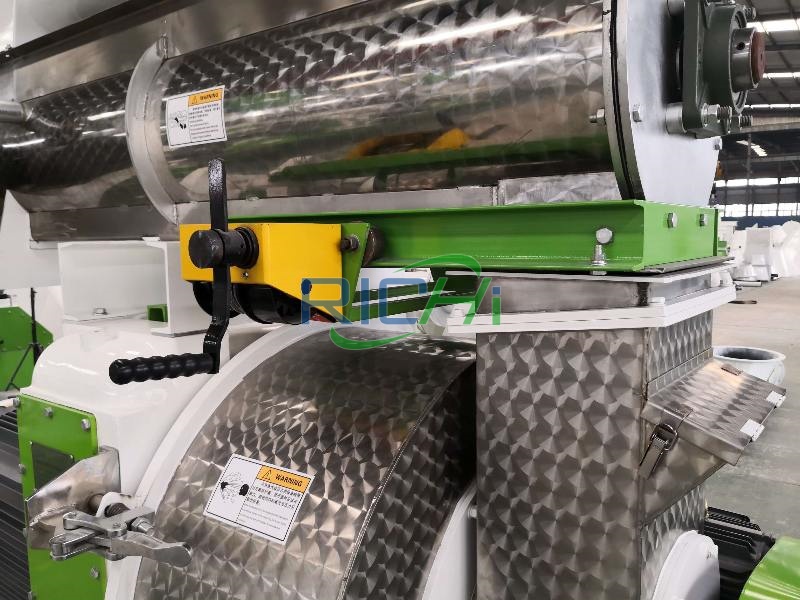
Durable construction
The machine body is made of high-quality 304 stainless steel and combined with embossing technology to enhance strength and corrosion resistance. This solid structural design ensures a longer service life of the equipment and is easy to clean, making it suitable for the biomass and feed industries.
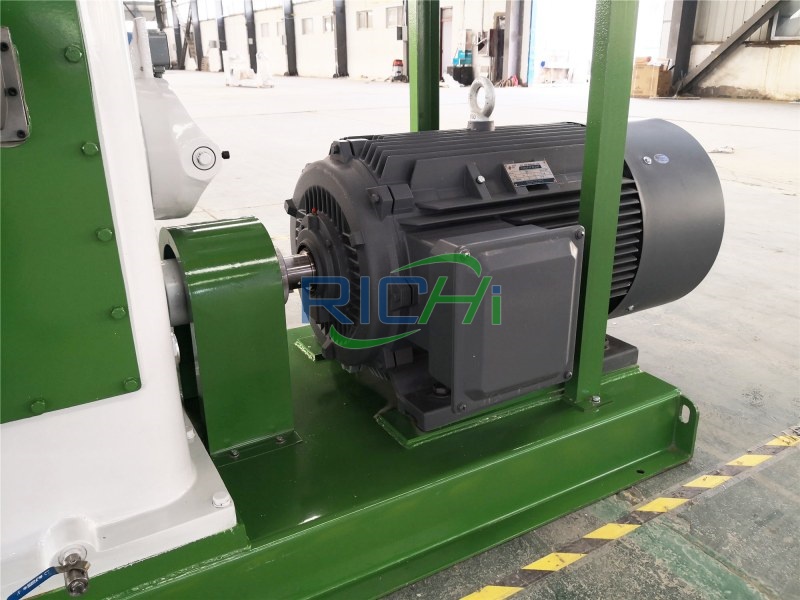
High-Quality Components
The equipment is equipped with internationally renowned Siemens motors and SKF bearings, providing stable power, low-noise operation, and extended life. These high-end components reduce downtime and ensure pellet quality during continuous production.
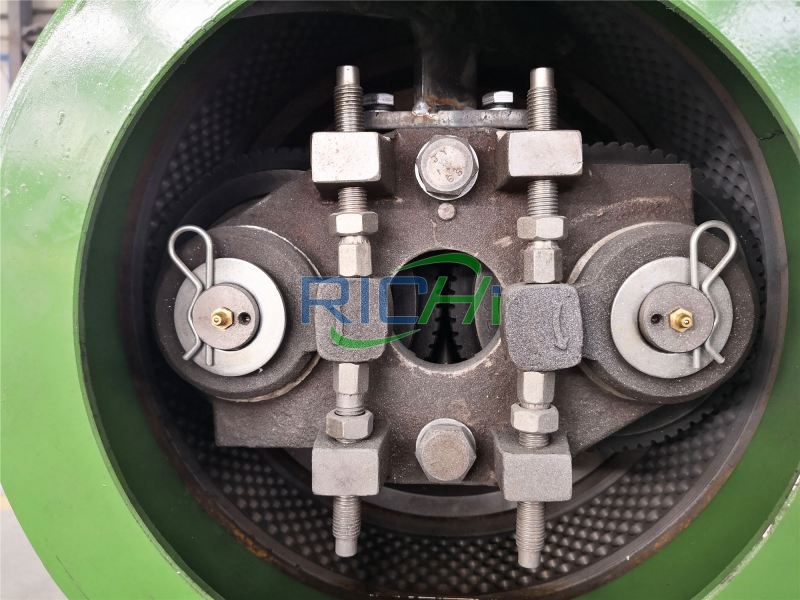
Efficient Transmission
The optimized transmission structure improves power transmission efficiency and reduces mechanical wear. This makes the equipment more reliable under high loads and reduces long-term maintenance costs.
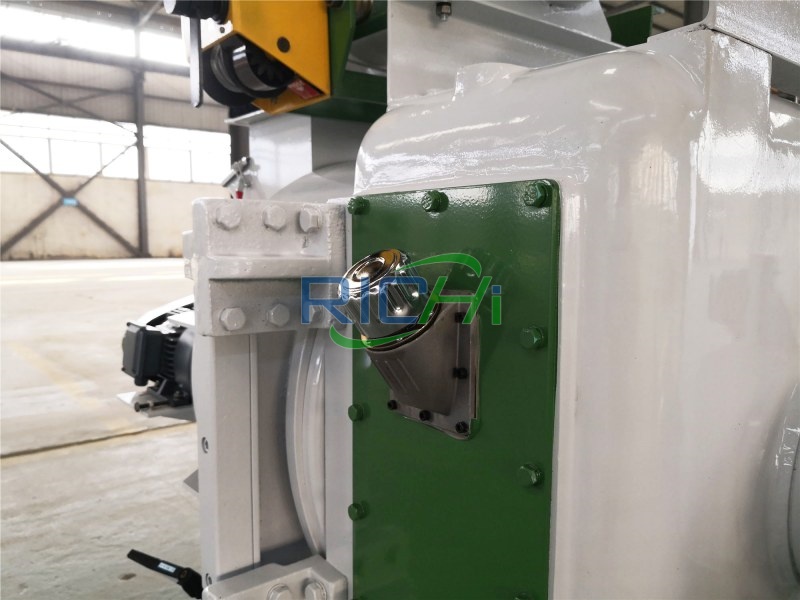
Modular Design
Its modular design allows key components to be replaced, upgraded, or expanded individually. This design simplifies maintenance, reduces downtime, and increases the long-term investment value of the equipment.
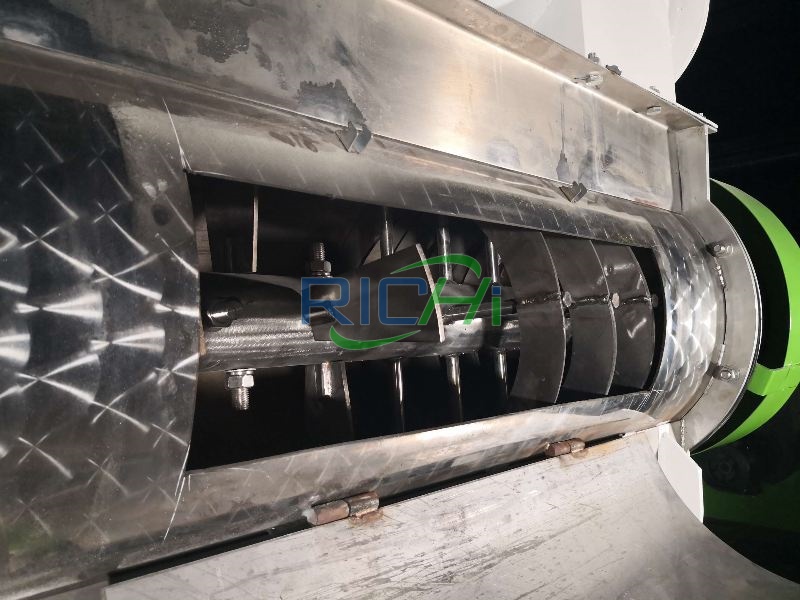
Customizable Options
We can customize our equipment to meet customer needs, such as adding a multi-layer conditioner for feed production. This customized solution not only improves the palatability and digestibility of the feed, but also enables the equipment to adapt to various industrial applications.
RICHI MACHINERY
Specifications & Parameters of bagasse pellet machine for sale
To help you better understand the performance and capacity of this bagasse pellet mill, we provide detailed technical parameters for reference. These specifications cover output range, power configuration, pellet size, and other key data, allowing you to choose the most suitable model according to your production needs.
| Model | MZLH320 | MZLH350 | MZLH420 | MZLH520 | MZLH678 | MZLH768 |
| Main motor power (kW) | 22 | 37 | 90 | 132 | 185 | 250 |
| Arch feeder power (kW) | 2.2 | 2.2 | 3 | 3 | 3 | 4 |
| Forced feeder power (kW) | 0.75 | 0.75 | 1.5 | 1.5 | 1.5 | 1.5 |
| Ring die diameter (mm) | 320 | 350 | 420 | 520 | 673 | 762 |
| Finished pellet diameter (mm) | 2~12 | |||||
| Output (t/h) | 0.2-0.3 | 0.3-0.5 | 1.0-1.2 | 1.5-2.0 | 2.5-3.0 | 3.0-4.0 |
Our bagasse pellet machines are continuously upgraded to meet the latest industry standards and customer needs. If you have any questions or specific requirements, please feel free to contact us at any time—we are always here to provide professional support and solutions.
global cases of RICHI bagasse pellet machine
— Richi Machinery —
With over 30 years of pelleting experience and projects in over 140 countries and regions, RICHI Machinery has become a trusted partner in the biomass and feed pelleting industry. Our bagasse pellet mills and other pellet equipment products are exported worldwide, helping customers transform agricultural by-products into valuable resources. Each project is customized based on local raw material characteristics, energy policies, and customer needs, ensuring efficient, stable, and sustainable returns.
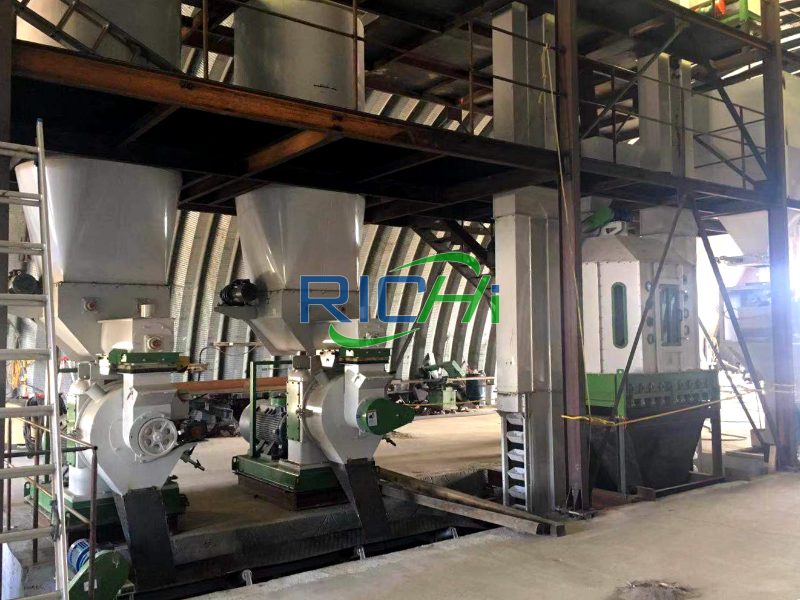
2-2.5 t/H bagasse pellet machine for sale India
Project Background: India is one of the world’s largest sugarcane producers, with abundant bagasse resources. Local sugar refineries produce large quantities of bagasse during the crushing process. Traditionally, these wastes are simply dumped or incinerated, which not only occupies land but also pollutes the environment.
The client wanted to build a 2-2.5 ton/hour biomass pellet production line to convert this waste into clean fuel pellets for use in the sugar refinery’s own boilers and surrounding power plants. This would not only save energy costs but also enhance the company’s image as a green and sustainable company.
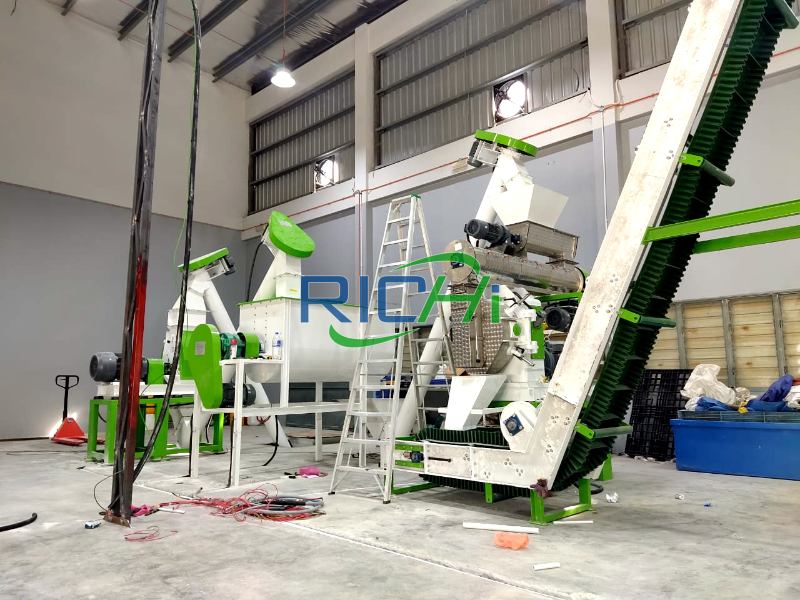
1-1.5 t/H bagasse pellet mill for sale Mexico
Project Background: Mexico is a major sugarcane producer and sugar exporter in Latin America, with a vast resource of bagasse byproduct. The client, primarily a small organic fertilizer processor, wanted to combine bagasse with livestock and poultry manure to produce high-efficiency organic fertilizer pellets for the local agricultural market.
This client invested in a pellet machine for bagasse with a production capacity of 1-1.5 tons/hour. This not only solved problems with raw material accumulation and odor, but also pioneered a new business model for agricultural ecological recycling.
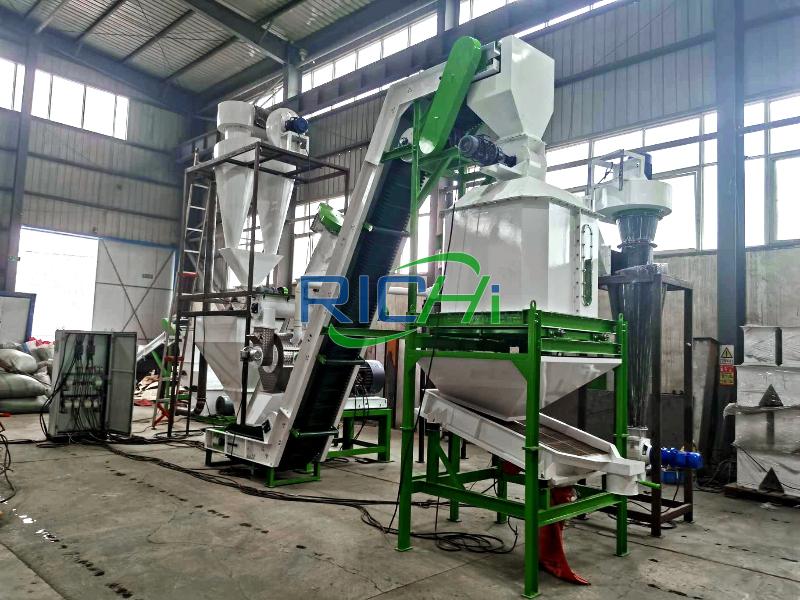
3 t/H bagasse pellet machine for sale south Africa
Project Background: South Africa is one of Africa’s major sugar-producing regions. Sugarcane cultivation and sugar processing are concentrated along its eastern coastal region, generating significant quantities of bagasse.
The client, an energy company, installed a 3T/H biomass pellet making machine for bagasse specifically to convert sugar refinery byproducts into biomass fuel pellets for local small and medium-sized industrial boilers and district heating systems. This project effectively reduced environmental pollution caused by bagasse waste while also replacing some coal with fuel pellets, achieving a win-win situation for both economic and environmental benefits.
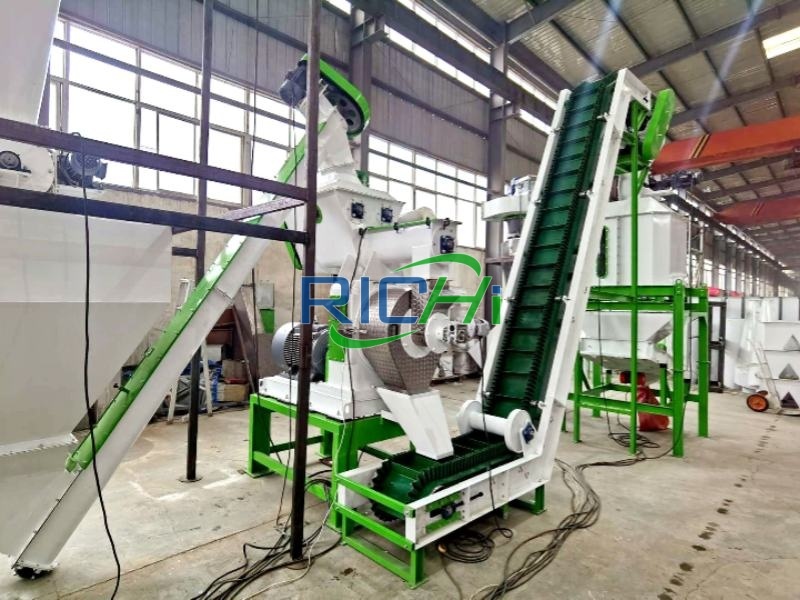
2.5 t/H bagasse pellet machine for sale Thailand
Project Background: As a major global sugar exporter, Thailand produces a significant amount of bagasse annually. The client, an energy company, planned to invest in a 2.5 ton/hour bagasse pellet production line to convert the bagasse into high-calorific fuel pellets for local biomass power plants and export to markets such as Japan and South Korea.
This project will help the company achieve greater competitiveness in energy exports and align with Thailand’s renewable energy development strategy.
How bagasse pellet machine Ensures Efficiency and Quality in Pellet Production Line?
— Richi Machinery –
In modern biomass processing, sugarcane bagasse pellets have become a vital resource for industries such as fuel, feed, and organic fertilizer. For example, in this bagasse pellet production line, the pelletizer plays a crucial role in this process, ensuring uniform pellet size, stable density, and strong durability—all crucial for efficient combustion and long-term storage.
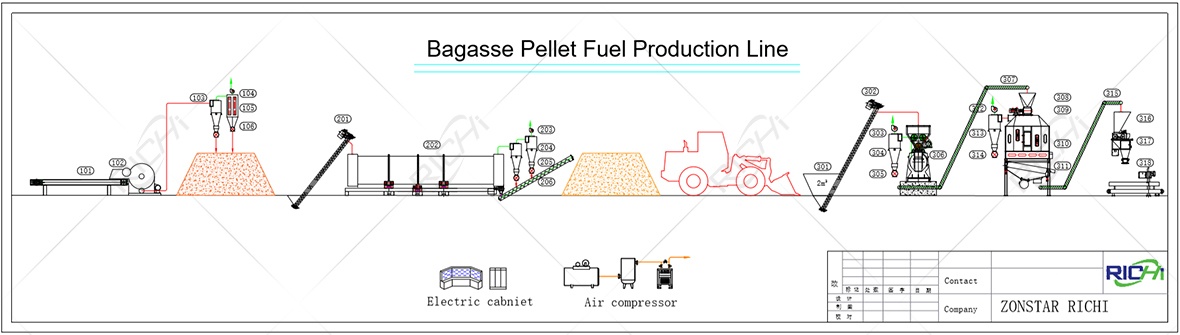
- Raw Material Preparation: First, the sugarcane bagasse is collected and crushed in a pulverizer to reduce fiber length and ensure uniform feed to the pelletizer.
- Drying: If the sugarcane bagasse has a high moisture content, it needs to be dried in a dryer to remove excess moisture. Generally, the moisture content should be controlled to 12–18% to facilitate pressing and pellet formation.
- Pelletizing: The processed sugarcane bagasse is fed into the bagasse pellet machine, where it passes through a conditioner and is then pressed into uniform pellets ranging from 2 to 12 mm using a ring die. A well-designed sugarcane bagasse pelletizer not only maximizes raw material utilization, but also ensures stable output, uniform pellets, and long-term durability.
- Cooling: The granules, freshly granulated, are still hot and require cooling. A pellet cooler machine is used during this stage to reduce moisture and harden the surface to prevent deformation or breakage during storage and transportation.
- Screening and Packaging: The cooled granules are screened to remove fines and debris. Acceptable granules are then fed into a fully automated packaging machine for packaging for storage, sale, or export.
This process not only reduces agricultural waste but also contributes to sustainable energy solutions. With its stable performance and continuous output, the bagasse pelletizer provides reliable support for industrial and farm applications, helping them obtain a renewable, economical, and environmentally friendly alternative energy source.

Frequently Asked Questions
To help you better understand our bagasse pellet mill, we have compiled some frequently asked questions from our customers. These answers will give you more clarity on machine performance, applications, maintenance, and investment considerations.
What is a bagasse pellet machine?
It is a machine specifically designed to compress bagasse, the residue left over from the sugar production process, into dense, uniform pellets. The bagasse residue left after sugarcane juice extraction is typically lightweight and bulky, making it difficult to store and transport. However, pelletizing can transform it into high-density pellets with a bulk density of approximately 600–800 kg/m³.
During operation, the bagasse is fed into a pelletizing chamber, where rollers press it against a die. The frictional heat softens the lignin in the fibers, creating a natural adhesive. The bagasse is then extruded into strands within the die holes and cut into pellets ranging in diameter from 2–12 mm.
These pellets are easier to store and transport and can be widely used as biomass fuel, mixed with other raw materials as feed additives, or as raw materials for organic fertilizers. Typical equipment has a production capacity of 0.2–4.0 tons/hour and is equipped with durable motors, bearings, and an optimized drive system to ensure stable operation. Bagasse pelletizers not only transform low-value agricultural waste into a high-value energy and feed resource, but also provide both environmental and economic benefits.
Can I use the same machine to produce both bagasse fuel pellets and animal feed pellets?
Although bagasse fuel pellets and animal feed pellets are both produced through the pelletizing process, the machine configurations used are different. Bagasse fuel pellet machines (suitable for bagasse, wood chips, straw, etc.) are primarily designed for high compression ratios and high temperatures, using different ring die compression ratios. The emphasis is on pellet density and calorific value. Bagasse feed pellet machines, on the other hand, must maintain the nutritional content of the raw material, be equipped with a conditioner (steam conditioning), and meet the hygiene standards for livestock, poultry, or aquaculture. Their ring die, conditioning system, and feeding methods are significantly different from those of biomass fuel pellet machines. Therefore, a single machine cannot produce both fuel and feed pellets simply by changing the raw material. However, we can provide specialized bagasse pellet machines for feed production, customized to meet the needs of poultry, livestock, or aquaculture feed.
| Model | SZLH250 | SZLH320 | SZLH350 | SZLH420 | SZLH508 | SZLH558 | SZLH678 | SZLH768 |
| Main Motor Power (kW) | 22 | 37 | 55 | 110 | 160 | 185 | 250 | 315 |
| Feeder Power (kW) | 1.1 | 1.5 | 1.5 | 1.5 | 1.5 | 1.5 | 1.5 | 2.2 |
| Modulator Power (kW) | 1.5 | 4 | 4 | 7.5 | 7.5 | 11 | 11 | 11 |
| Die Inner Diameter (mm) | 250 | 320 | 350 | 420 | 508 | 558 | 673 | 762 |
| Finished Pellet Diameter (mm) | 2~12 | |||||||
| Output (T/H) | 1.0-1.5 | 3-4 | 5-6 | 10-12 | 15-16 | 20-22 | 30-33 | 38-40 |
Do you provide bagasse pellet machines for producing organic fertilizer pellets?
Yes, we can provide the machine which is suitable for producing organic fertilizer pellets. Bagasse, a byproduct of the sugar industry, is rich in fiber and organic matter. By mixing it with raw materials such as livestock manure, crop straw, or compost, it can be made into high-value-added organic fertilizer pellets.
| Model | FZLH250 | FZLH320 | FZLH350 | FZLH420 | FZLH520 | FZLH678 | FZLH768 |
| Main Motor Power (kW) | 22 | 22 | 37 | 90 | 132 | 185 | 250 |
| Broken Arch Feeder Power (kW) | 2.2 | 2.2 | 2.2 | 3 | 3 | 3 | 4 |
| Forced Feeder Power (kW) | 0.75 | 0.75 | 0.75 | 1.5 | 1.5 | 1.5 | 1.5 |
| Ring Die Inner Diameter (mm) | 250 | 320 | 350 | 420 | 520 | 673 | 762 |
| Finished Pellet Diameter (mm) | 4~12 | ||||||
| Output (T/H) | 1-1.5 | 2-3 | 3-5 | 6-8 | 9-12 | 18-22 | 22-26 |
Compared to fuel pelletizers, our bagasse organic fertilizer pelletizer features a lower ring die compression ratio to ensure nutrient degradation. Furthermore, the equipment utilizes corrosion-resistant materials in areas that come into contact with the organic fertilizer raw material. An optional conditioning system can be installed to add steam, binders, or beneficial microorganisms. Therefore, it effectively improves bagasse utilization, reduces waste, and produces sustainable agricultural fertilizer products.
How can I choose the most suitable bagasse pellet machine?
Choosing the most suitable machine depends on several key factors.
- First, you need to clarify your production application: fuel pellets, animal feed pellets, or organic fertilizer pellets, as different applications require different machine configurations.
- Second, consider your production capacity requirements, for example, whether you need a small 0.2 t/h machine or a larger, complete industrial production line.
- Third, determine the raw material condition: whether the bagasse needs to be crushed and dried, or whether it already meets the moisture content and particle size requirements.
- Fourth, determine the required pellet diameter (common diameters for fuel pellets are 6–12 mm, and for feed pellets are 2–8 mm).
- Finally, consider your budget and the degree of automation required.
At RICHI Machinery, we can provide customized bagasse pellet machine and pellet plant solution based on your raw material characteristics, application, and expected production capacity. If you provide detailed requirements, our engineers will recommend the most suitable model.

